
Oyster Pond Real Estate for Sale: SXM Marina Guide (2026)
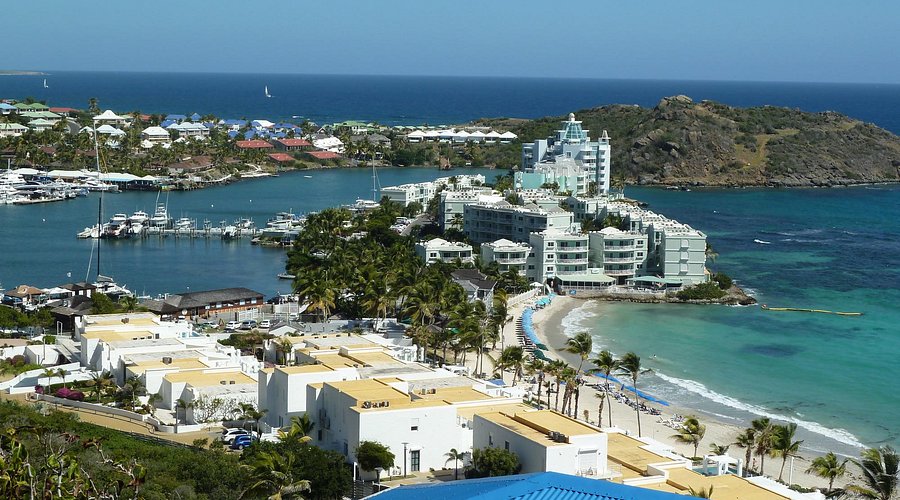
Oyster Pond real estate for sale ranges from marina condos to hillside villas on St Maarten's quieter east coast, next to Dawn Beach and a working sailboat marina. On the Dutch side you buy freehold with no foreign-ownership limit, buyer closing costs run about 4 to 6 percent, and there is no annual property tax. The Dutch and French border runs through this corner of the island, so confirm which side any listing sits on with your notary.
- Oyster Pond is a marina neighborhood on St Maarten's windward east coast, next to Dawn Beach and a short drive from Philipsburg, the capital.
- Dutch-side buyers get freehold title, no annual property tax, and closing costs near 4 to 6 percent, usually with the seller paying the agent commission.
- The property mix runs from marina condos to waterfront townhouses and hillside villas, some with dock access.
- The Dutch and French border runs through the Oyster Pond area, so verify a listing's jurisdiction with your notary before you make an offer.
What kind of Oyster Pond real estate for sale can you buy?
Oyster Pond real estate for sale runs from marina condos to waterfront townhouses and hillside villas on the east coast of St Maarten, next to Dawn Beach. You will also see the occasional building lot or a fixer that has been sitting. Prices cover a wide range, from smaller condos to large villas with dock access and long water views, so ask me for current asking prices rather than working off a number you read online.
When I show clients around Oyster Pond, I sort the listings into three buckets. Condos sit closest to the marina and the beach and are usually the simplest entry point, whether you are buying a first place here or a unit you intend to rent out. Townhouses give you more room and often a small yard or a plunge pool. Villas climb the hillside toward Dawn Beach, where the views open over the water toward the islands offshore.
What separates one listing from another here is rarely the floor plan. It is the exposure, the water access, and the condition of the building itself. The questions I push buyers to ask on any Oyster Pond property:
- What does the association actually cover, and what is the current dues figure?
- When were the roof, shutters, and windows last replaced or upgraded?
- Is there a cistern, a generator, or a backup for water and power?
- Does a slip at the marina come with the property, or does it have to be arranged separately? Buyers assume it is included far more often than it is.
Because this is the quieter, more residential end of the island, inventory moves less frantically than in Simpson Bay or Maho. That is a plus if you like to take your time. It also means the right unit may not be listed the week you start looking, so I keep a running list of owners who would sell to the right buyer. If you want the full lay of the land first, read my Oyster Pond neighborhood guide, then come back here for the buying side.
Where is Oyster Pond and what is marina life like?
Oyster Pond is a natural harbor on the windward east coast of St Maarten, built around a working marina and a short walk from Dawn Beach. Marina life here means sailboats and catamarans on their moorings, steady trade winds, and a slower pace than the west coast. It is boating culture more than nightlife.
I live on the Dutch side, and Oyster Pond is one of the places I take clients who tell me they want water without the crowds. The marina is the heart of the area. Boats come and go, the dock restaurants fill up toward sunset, and cruisers stop through on their way around the Caribbean. If you have ever wanted a home where you can keep a boat close by, this is the part of the island that is set up for it.
Dawn Beach is the other draw. It faces east, so you get morning light, reef snorkeling offshore, and good beach days when the west coast is flat. The trade-off with the windward side is real: it can be breezy and the surf picks up, which some people love and others find too active for daily swimming. I walk clients down to the water at different times of day before they commit to a specific unit, because the same stretch of sand reads very differently at eight in the morning and at four in the afternoon.
The rest of the island stays open to you from here. Grand Case, the dining village on the French side, is an easy evening out. Anguilla is a ferry trip for a day away. Marigot and Philipsburg give you two capitals for shopping and paperwork. What you give up in Oyster Pond is walk-out-the-door convenience. What you get back is quiet, and for the buyers who choose this corner, that trade is the entire point.
How much do homes for sale in Oyster Pond SXM cost to buy?
Expect to budget roughly 4 to 6 percent of the purchase price in closing costs when you buy Oyster Pond real estate on the Dutch side, and the seller usually pays the agent commission. There is no annual property tax on the Dutch side, which changes the math for anyone comparing St Maarten with other Caribbean markets or with the French side.
On the Dutch side a civil-law notary is mandatory. The notary handles the title search, the deed, the escrow, and the registration, which is why US-style title insurance is not the norm here. Here is how buyer costs typically break down. Treat it as a planning range, not a quote, and have your notary confirm the exact figures for your purchase.
| Line item | Rough amount | Who pays |
|---|---|---|
| Transfer tax | About 4% of price | Buyer |
| Notary fee | About 1 to 1.5% | Buyer |
| Agent commission | Usually nothing to the buyer | Seller |
| Annual property tax | $0 | Not charged, Dutch side |
| Total buyer closing | About 4 to 6% | Paid at the notary |
Financing exists for qualified foreign buyers who bring a down payment, and your notary and lender can tell you what terms you would actually qualify for. The French side of the island generally costs more to buy and to hold, with transaction costs often in the 7 to 8 percent range plus annual taxes, so two similar-looking properties can carry very different lifetime costs. Day to day you spend US dollars on the Dutch side and euros on the French side.
The number I push buyers to model is not the closing figure alone. Look at association dues, insurance in a hurricane-belt market, utilities, and any maintenance a building has quietly deferred. Those are the costs that decide whether a place still feels comfortable in year three. For the full step-by-step, see my guide to buying property in St Maarten. For the tax and legal fine print, verify everything with your notary and your tax advisor, since I am an agent, not a legal or tax authority.
Which side of the border is your Oyster Pond property on?
The Dutch and French line runs through this corner of the island, which makes the border question sharper in Oyster Pond than almost anywhere else you could buy on St Maarten. The side a title sits on sets the rules for ownership, closing costs, currency, and annual taxes. Confirm the jurisdiction of any specific listing with your notary before you make an offer.
This is the one area where I slow clients down over a map. Dutch-side rules mean freehold with no restriction on foreign ownership, no annual property tax, and buyer closing costs near 4 to 6 percent. French-side rules generally mean higher transaction costs, often 7 to 8 percent, plus annual taxes to carry every year you own. The currency you use day to day differs as well: US dollars on the Dutch side of Sint Maarten, euros on the French side. There is no border checkpoint anywhere on the island, so you cross freely, and that is exactly why it is easy to lose track of which country you are standing in.
Before you fall for a specific Oyster Pond listing, ask one question early: which side of the border is the title on? I have watched buyers assume Dutch-side terms without ever checking. Your notary can confirm the jurisdiction from the title, and it is worth doing on day one, not at signing.
The whole island is about 87 sq km, roughly 34 on the Dutch side and roughly 53 on the French side. Two nations, one piece of land, no checkpoint between them. That closeness is a genuine pleasure when you live here, and it only becomes a problem when someone assumes the terms of a purchase instead of verifying them. If you want to understand how the two systems differ before you start shopping, my breakdown of the Dutch versus French side covers ownership, taxes, and cost of living side by side.
Is Oyster Pond a good place to buy, live, or rent out?
Oyster Pond is a good buy if you want a quieter, boat-friendly base with beach access and you do not need nightlife at your door. It suits second-home owners, sailors, and long-stay residents more than someone who wants to walk to bars and casinos. As a rental, it tends to draw couples and families who want calm over party energy.
The honest trade-offs: the east coast is breezier and a little more remote, so you will drive for a big grocery run or for Princess Juliana airport, and that drive is longer than it would be from the west coast. The upside is what the distance buys you, which is steady trade winds that keep interiors cooler, darker skies at night, and a neighborhood where you recognize the cars. On the rental side, this is a quieter end of the island than Maho, so I talk with owners about what their specific unit can realistically do before anyone counts on rental income to carry the purchase.
Oyster Pond is where I send buyers who want the boat, the reef, and the quiet, and who are happy to trade a longer drive for all three.Wei Landgraf, Dutch-side resident agent
If you are thinking about living here rather than visiting, the immigration piece matters as much as the property. US, Canadian, UK, and EU visitors generally arrive on a valid passport with no visa for stays of up to 90 days, and anything beyond that points toward a residence permit. Rules change, so check the current requirement with immigration before you rely on it, and do that before you buy rather than after.
One practical note on the building itself. Hurricane Irma hit in September 2017, and construction standards on the island improved afterward, so I push buyers to ask about roof, shutter, and structural details on any older unit, and to get an independent inspection instead of taking a listing description at face value. St Maarten sits inside the hurricane belt, and that is simply part of owning here. If you want to compare the risk profile, an island like Aruba sits outside the belt. I would rather you weigh that trade-off with clear eyes than be surprised by it later.
How does Oyster Pond compare to Simpson Bay, Cupecoy, and Maho?
Compared with the west coast neighborhoods, Oyster Pond trades walkable nightlife and dense condo towers for marina calm, Dawn Beach, and more space for your money. Simpson Bay and Maho are livelier and closer to Princess Juliana airport, Cupecoy leans luxury and sunset views, and Oyster Pond leans quiet, boating, and east-facing beach mornings.
| Neighborhood | Best for | Feel |
|---|---|---|
| Oyster Pond | Sailors, quiet, Dawn Beach | Calm, residential, windward |
| Simpson Bay | Nightlife, dining, convenience | Busy, central, walkable |
| Cupecoy | Luxury condos, sunsets | Upscale, cliffside, west-facing |
| Maho | Rentals, action, airport-close | Energetic, touristy |
Maho is the beach where planes come in low over the sand, which is a spectacle for a week of vacation and a real decision when you are choosing where to sleep every night. Simpson Bay puts restaurants and marine services at your door. Cupecoy sits up on the cliffs near the Mullet Bay golf grounds and faces the sunset. Oyster Pond faces the reef and the sunrise. None of these is objectively better than the others. They are answers to different questions.
There is no single best neighborhood, only the best fit for how you actually want to spend your days. If your ideal week involves a boat, a reef, and coffee facing the sunrise, Oyster Pond is hard to beat. If you want to walk to dinner and be close to the runway, look west first. When you are ready to see real listings, browse current homes for sale in St Maarten, tell me which side of the island fits you, and I will narrow it down.
Frequently Asked Questions
Can foreigners buy property in Oyster Pond, St Maarten?
Yes. On the Dutch side of Oyster Pond there is no restriction on foreign ownership, and you buy freehold. A civil-law notary is mandatory and handles the title search, deed, escrow, and registration. Financing exists for qualified foreign buyers who bring a down payment, and your notary and lender can confirm what applies to your purchase.
How much are closing costs on an Oyster Pond home?
Budget about 4 to 6 percent of the purchase price on the Dutch side, paid by the buyer. That is roughly 4 percent transfer tax plus a notary fee near 1 to 1.5 percent. The seller usually pays the agent commission, and there is no annual property tax. I am an agent, not a legal or tax authority, so confirm the exact figures for your purchase with your notary.
Is Oyster Pond on the Dutch or French side of St Maarten?
The Dutch and French border runs through the Oyster Pond area, so jurisdiction is a per-listing question rather than a neighborhood-wide one. The side a title sits on sets the ownership rules, the closing costs, the annual taxes, and the everyday currency. Confirm a specific listing’s jurisdiction with your notary before you make an offer.
Are there condos for sale in Oyster Pond SXM?
Yes. Condos are a common type of Oyster Pond real estate for sale, particularly the units closest to the marina and Dawn Beach, and they are usually the simplest entry point for a first purchase or a rental unit. Waterfront townhouses and hillside villas sit above them. Ask me what is actually on the market right now, because inventory here is thinner than on the west coast.
Is Oyster Pond a good place to live year-round?
It suits people who want a quiet, boat-friendly base with beach access over nightlife. You get steady trade winds, Dawn Beach, and a real neighborhood feel, with the trade-off that you will drive for major shopping or for Princess Juliana airport, and that drive is longer than it would be from the west coast. I walk clients through both sides of the island before they choose.
Does Oyster Pond have property tax?
There is no annual property tax on the Dutch side, which is one reason buyers compare St Maarten favorably with other Caribbean markets. Your main cost is the one-time closing, around 4 to 6 percent for the buyer. For your specific situation, and for anything touching your tax position at home, verify the details with your notary and your tax advisor.
