
St Maarten Mortgage for Foreigners: American Buyer Guide (2026)
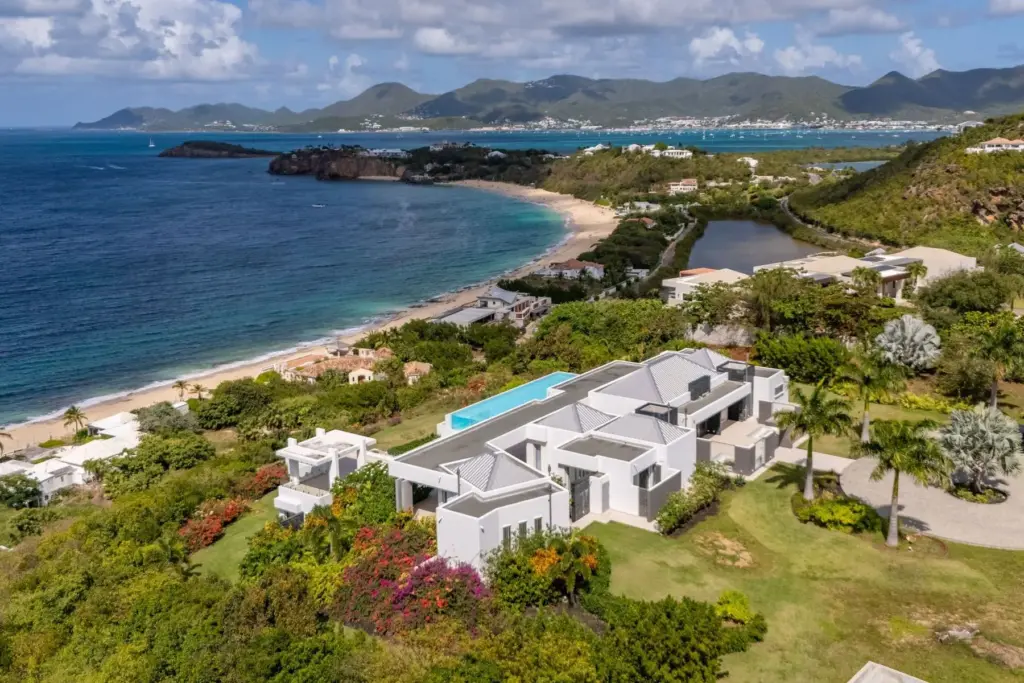
A st maarten mortgage for foreigners is possible: Dutch-side banks finance qualified non-resident buyers who bring a down payment. You do not need residency or a permit to hold freehold title here, US visitors get 90 days visa-free to house-hunt, and buyer closing costs run about 4 to 6 percent. Verify loan terms with the bank and the legal steps with your notary.
- Dutch-side St Maarten has no restriction on foreign ownership, so Americans can buy freehold title outright.
- Financing exists for qualified foreign buyers, and a down payment is required. The amount is set by the bank, not by any published rule.
- Buying property is not a route to residency. Living in SXM beyond the visitor window means applying for a residence permit.
- Buyer closing costs are about 4 to 6 percent of the price, and there is no annual property tax on the Dutch side.
St Maarten Mortgage for Foreigners: Can You Get One?
Yes, in principle. A St Maarten mortgage for foreigners is available through Dutch-side banks to qualified non-resident buyers who bring a down payment. There is no restriction on foreign ownership on the Dutch side, so an American can hold freehold title, and financing part of the purchase is a normal conversation to have with a local lender.
I live on the Dutch side and I walk buyers through this regularly. The short version: ownership is the easy part. Sint Maarten, the Dutch south, treats a US buyer the same as anyone else when it comes to holding title, and a civil-law notary registers the deed. Financing is where American buyers get surprised. Financing exists here for qualified foreign buyers who bring a down payment, but the underwriting is local, not a US conforming process. I do not set bank policy, so ask the lender directly what they require and how long their review takes.
What I can do is separate what is settled from what is not. Settled: you can own, outright, in your own name. Settled: buyer closing costs on the Dutch side run about 4 to 6 percent, and there is no annual property tax. Not settled, and not something I am going to guess at on a blog post: the down payment percentage, the rate, the document list, and the approval window. Those belong to the bank, they vary by lender and by borrower, and they change. Anyone who publishes a firm number for them is guessing on your behalf, and you are the one who pays for a wrong guess.
If you are still mapping the whole transaction, start with my overview of buying property in St Maarten, then come back here for the mortgage specifics. Cash buyers close faster, but plenty of the buyers I work with finance, keep their US capital working, and still get the keys.
What do Dutch-side banks require from American buyers?
The one thing I can tell you with confidence is that a down payment is required. Beyond that, requirements differ from bank to bank, so rather than publish a checklist that may be wrong for your lender, I will connect you with a Dutch-side bank and let them tell you exactly what they need for your file.
That is a less satisfying answer than a tidy list, and it is the honest one. The useful move is not to memorize requirements you found online, it is to walk into the first bank conversation with the right questions and get the answers in writing. Here is the list I hand buyers before that call.
| Question to ask the lender | Why it matters |
|---|---|
| How much do I need to put down? | The down payment is the requirement I can state with confidence. The size of it is set by the bank, and it drives your whole budget. |
| What do you need from a non-resident buyer? | Every bank runs its own file. Get the list in writing so you are not chasing paperwork in the middle of a deal. |
| How long does your review take? | I do not publish an approval window because it varies. Ask, then build your offer timeline around their answer, not around a US timeline. |
| Do I need a local bank account? | If the answer is yes, that step can add time. Better to know before you make an offer than after. |
| Will you lend on this specific property? | Condition, title, and location can all affect what a bank is willing to finance. |
| What happens if your review comes back short? | Know your fallback, and how your offer is worded, before you sign anything. |
Two things trip up American buyers. First, timelines: I do not publish an approval window because it varies by bank, so start the bank conversation before you fall in love with a listing rather than after. Second, banking logistics: ask your lender early whether they want a local account, since that step can add time. My notes on opening a bank account in St Maarten cover what that side of the process looks like.
One more thing worth saying plainly. I do not set your rate or your terms, only the bank does. If you hear a down payment percentage secondhand, from a forum, from another buyer, from an older article, treat it as a rumor until a lender confirms it for your situation.
Do you need residency or a permit to buy in St Maarten?
As I understand it, no. There is no restriction on foreign ownership on the Dutch side, so residency is not what qualifies you to hold title. Whether a specific bank ties lending to your status is a question for that bank, and your notary can confirm the ownership side. Ownership and immigration run on separate tracks here, and buying a home is not a route to residency.
This is the question I get most from US buyers, so let me separate the pieces. St Maarten immigration requirements come into play when you want to stay longer than a visitor or actually live here. As a visitor you get up to 90 days. Staying beyond those 90 days means applying for a residence permit. I am not going to list the conditions here, because they depend on your category and they change, and I am not an immigration advisor. Get the current requirements from a licensed immigration advisor, and check the current rule with immigration before you rely on it.
Where St Maarten residency requirements intersect with your purchase is timing and expectation. I have seen buyers assume the deed would take care of the visa, then have to scramble. Decide early which one you actually want: a second home you visit inside the visitor window, or a life here full time. Those two answers lead to different properties, different budgets, and a very different paperwork load. A vacation-use condo you lock up for eight months is not the same purchase as the house you intend to live in.
I am a real estate agent, not a lawyer, a notary, or an immigration advisor, and I am not going to pretend otherwise on a page you might act on. If residency is your real goal, read the US citizen residence permit steps alongside your purchase plan, and confirm every step with a licensed advisor before you rely on it. What I can do is make sure the property you buy actually fits the life you are planning.
What are the entry requirements to visit St Maarten?
US, Canadian, UK, and EU visitors need a valid passport to enter St Maarten and can stay up to 90 days without a visa. There is no separate tourist visa for these nationalities. That 90-day window is more than enough time to fly in, tour neighborhoods, and start a purchase or a mortgage conversation. Rules can change, so confirm the current Sint Maarten entry requirements with your airline or the immigration authority before you travel.
Come on a real scouting trip before you finance anything. I show buyers around the island, from Simpson Bay over to Dawn Beach, so they can feel the difference between areas instead of judging from listing photos. Two neighborhoods that look interchangeable online can feel nothing alike once you have stood in both at the same hour of the day.
Princess Juliana airport (SXM) sits on the Dutch side and is a major regional hub with direct flights from the US and Europe, so coming back for a signature or a closing is straightforward. That matters more than people expect when a bank asks for one more document. If a longer stay is on your mind, anything past those 90 days shifts you into residence-permit territory, which is a different conversation, and one I cover in my guide to moving to SXM.
One thing to understand before you land: this is two nations on one island, 87 sq km in total, with about 34 sq km on the Dutch side and about 53 sq km on the French side, and no border checkpoint between them. You can drive from Dutch Sint Maarten into French Saint-Martin without stopping. That freedom is lovely for lunch in Grand Case and confusing for a purchase, because the two sides have different currencies, different taxes, and different transaction costs. Which side you buy on is a real decision, not a detail.
How much are closing costs, and who pays what?
Budget about 4 to 6 percent of the purchase price in closing costs, and you pay them as the buyer. That is roughly 4 percent transfer tax plus about 1 to 1.5 percent for the notary. The seller usually pays the real estate commission, and there is no annual property tax on the Dutch side. Your notary computes the actual settlement figures, so confirm your own numbers with them.
| Cost | Who pays | Rough amount |
|---|---|---|
| Transfer tax | Buyer | About 4% of price |
| Notary fee | Buyer | About 1 to 1.5% of price |
| Agent commission | Seller (usually) | Built into the deal |
| Annual property tax | Nobody, Dutch side | $0 |
The civil-law notary is not optional here, and that is a feature, not a hurdle. The notary runs the title search, holds your money in escrow, drafts the deed, and registers it. That is why US-style title insurance is not the norm on the Dutch side: the notary's search and registration are doing that job. The US dollar is used in daily life here, though the official currency is the Antillean guilder, so ask your notary which currency your closing figures will be stated in and make sure your bank transfer matches. Small mismatches at the wire stage cause real delays.
On the Dutch side you close through a notary, pay four to six percent, and there is no annual property tax. That is a real cost advantage, though it does not make every Dutch-side property a good buy.Wei Landgraf, Dutch-side resident agent
One note if you are comparing sides. The French north, Saint-Martin, is generally more expensive to buy and to hold, with transaction costs often in the 7 to 8 percent range plus annual taxes. That does not settle the question for you. Some buyers want French Saint-Martin and accept the carrying cost. What it does mean is that you should run the numbers for the actual side you are buying on, and for tax specifics on either side, verify with your tax advisor and your notary rather than taking my word for it.
Is a St Maarten mortgage worth it, or should you pay cash?
A St Maarten mortgage is worth it if you would rather keep your US capital invested than put all of it into one Caribbean property, and if you qualify comfortably. Cash wins on speed and on negotiating weight. There is no universal answer, so it comes down to your terms, your reserves, and how long you plan to hold.
Here is how I frame it with buyers. Financing keeps cash in your pocket for the maintenance that island property always asks for, and it can put a stronger home in reach than an all-cash budget allows. The trade-offs are the bank's timeline, the down payment the bank sets, and the interest you pay over the hold. Cash buyers move fast, which matters on the good listings, and they skip the bank file entirely. Neither path is the smart one in the abstract. The right one depends on numbers only you have.
- Finance if: you want to keep capital liquid, you have documented income, and you are buying for the long term.
- Pay cash if: speed and a clean offer matter most, or a bank timeline would cost you the property you actually want.
Whichever way you go, look hard at the building itself. The island sits inside the hurricane belt. Hurricane Irma hit in September 2017 and construction standards improved afterward, so when and how a property was built genuinely matters. Ask what the roof structure is, what the windows and shutters are, how the building came through past storms, what the insurance position is, and how water and power are handled. A lender will care about those answers. You should care about them even if you are paying cash and no lender ever sees the file.
I never push a buyer toward debt. I lay out both paths, connect you with a Dutch-side bank if you want financing, and let your numbers decide. Get pre-qualified before you shop so your offer is credible when the right home shows up. Want the full picture first? Read my St Maarten real estate overview.
Frequently Asked Questions
Can Americans buy property in St Maarten?
Yes. The Dutch side of St Maarten places no restriction on foreign ownership, so US citizens can buy freehold property outright and hold title. A civil-law notary handles the title search, deed, and registration, which is why US-style title insurance is not the norm here. You do not need residency or a permit to own. Confirm the ownership details for your specific purchase with your notary.
Do you need a residence permit to buy a house in St Maarten?
As I understand it, no. Ownership and immigration are separate tracks on the Dutch side, and there is no restriction on foreign ownership. Owning a home does not grant you residency either. If you plan to stay beyond 90 days you apply for a residence permit, and whether a specific bank ties lending to your status is a question for that bank. Confirm the current rules with a licensed immigration advisor and your notary.
How much down payment do foreigners need for a St Maarten mortgage?
A down payment is required, and the amount depends on the bank, the property, and your financial profile. I am not going to guess at a percentage, because it is set by the lender and it changes. Get pre-qualified with a local lender to see the current figure for your situation, and ask for it in writing before you build a budget around a loan.
What are the entry requirements for St Maarten?
US, Canadian, UK, and EU travelers need a valid passport and can stay up to 90 days without a visa. There is no separate tourist visa for these nationalities. Longer stays require a residence permit. Rules can change, so confirm the current Sint Maarten entry requirements with your airline or the immigration authority before you fly.
Is there annual property tax in St Maarten?
No, the Dutch side of St Maarten has no annual property tax, which is a real draw for US buyers used to yearly bills. Your main one-time costs are the roughly 4 percent transfer tax and the notary fee at closing. The French side does levy annual taxes, so the two sides differ. Tax rules can change, so confirm your own position with your notary or tax advisor rather than relying on this page.
Should I get a mortgage or pay cash for a St Maarten home?
It depends on your goals. Financing keeps your US capital liquid and can fund a stronger property, but it runs on the bank's timeline and requires a down payment set by the lender. Cash offers close fast and carry more negotiating weight. If you finance, get pre-qualified early so your offer stays credible when the right home appears.
