
Terres Basses Saint-Martin Real Estate: A Buyer's Guide (2026)
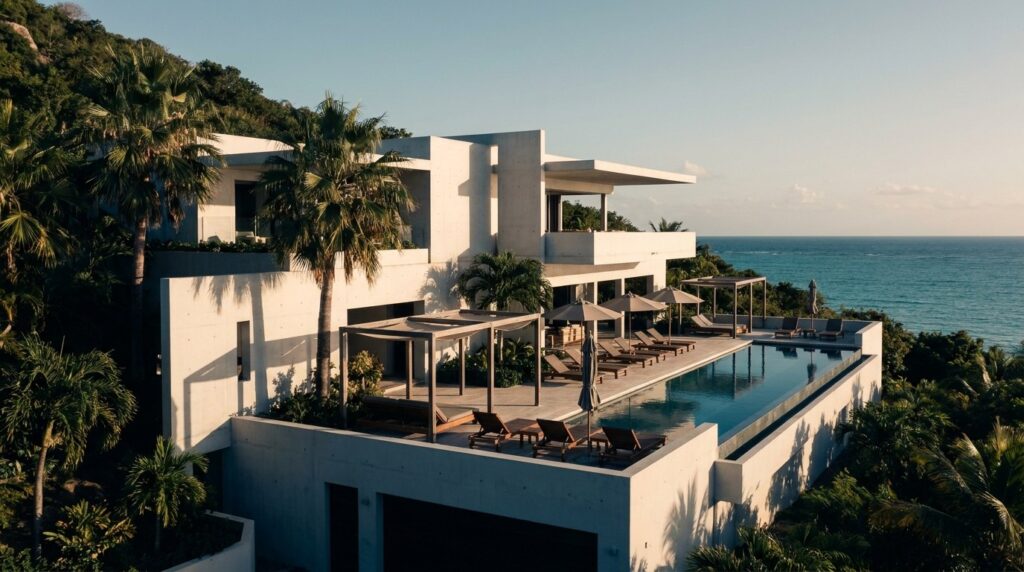
Terres Basses Saint-Martin real estate sits on the western end of Saint-Martin, the French side of the island: a quiet, villa-heavy residential area with very little built around its beaches. Expect euro pricing, French-side rules, and higher costs than the Dutch side, roughly 7 to 8 percent in transaction fees plus annual property taxes. You fly into SXM airport on the Dutch side and drive over with no border checkpoint.
- Terres Basses is a low-density residential area on the western end of Saint-Martin, the French side, known for private villas rather than resorts or nightlife.
- French-side buying costs run about 7 to 8 percent in fees plus annual property taxes, versus roughly 4 to 6 percent and no annual property tax on the Dutch side, St Maarten.
- You fly into SXM airport on the Dutch side and drive to Terres Basses with no border checkpoint. US, Canadian, UK, and EU visitors need only a passport for up to 90 days.
- The euro is used on the French side, while the Dutch side uses the US dollar in daily life.
What Is Terres Basses, and Why Do Buyers Ask About It?
Terres Basses Saint-Martin real estate sits at the western end of Saint-Martin, the French side of the island. The name is French for "the lowlands." It is a quiet, villa-heavy residential area rather than a resort strip: private homes, low density, and beaches with very little built around them. Most buyers find it after they have already seen the busier Dutch-side neighborhoods and decided they want something calmer.
I live on the Dutch side and I show clients property on both sides, so I get asked about Terres Basses almost every week. The honest answer to "what makes it different" is that very little happens there. No casinos, no cruise crowds, no strip of bars. What you get instead is space, privacy, and beaches you can walk without stepping over anyone. That is the appeal, and it is also why buying and holding there generally costs more than it does across the border in the St Maarten real estate market.
The questions I push clients to ask early, before they fall for a view, are the boring ones. How is the property reached, and who maintains the road? Is there a community or homeowners association, and what does it charge? What is the water and power setup, including cistern, generator, and backup? What storm protection is in place, and when was the villa built or last rebuilt? Those answers move the real cost of ownership far more than the sunset does, and I would rather raise them on the first walk-through than after you sign.
How Much Does Terres Basses Saint-Martin Real Estate Cost to Buy and Own?
Expect to pay more than on the Dutch side. On the French side, transaction costs often run about 7 to 8 percent of the purchase price, and annual property taxes apply. Pricing is in euros. I tell buyers to budget the closing cost and the yearly holding cost together, then confirm both with a notaire and a tax advisor before committing to anything.
Here is where the two sides genuinely differ. On the Dutch side, the civil-law notary is mandatory, and that notary handles the title search, the deed, escrow, and registration. That is the reason US-style title insurance is not the norm here: the notary process is the protection. The French side runs through a notaire, and I would have you confirm exactly what that role covers on your specific purchase, directly with the notaire, before you sign. I am an agent, not a lawyer or a notary, and I would rather send you to the right professional than guess at the mechanics on your behalf.
The other real gap is the annual bill. The French side applies annual property taxes that the Dutch side does not charge, so two similar villas can cost very different amounts to hold year after year. Confirm the exact taxes that would apply to you with your notaire and your tax advisor, because your residency and your ownership structure can change the answer.
| Cost item | Dutch side (St Maarten) | French side (Saint-Martin) |
|---|---|---|
| Foreign ownership | No restriction, freehold | Confirm current rules and structure with a notaire |
| Closing / transaction costs | About 4 to 6% | About 7 to 8% |
| Annual property tax | None | Yes, annual taxes apply |
| Everyday currency | US dollar | Euro |
| Who closes the sale | Civil-law notary, mandatory | French notaire |
On the Dutch side the seller usually pays the agent commission, and financing is available to qualified foreign buyers who can put down a deposit. If those lower Dutch-side costs interest you, I break down the full closing math in my guide to buying property in St Maarten. If you want a real figure rather than a range, send me the listing you are looking at and I will chase down a proper cost estimate for that specific property.
Sint Maarten vs Saint-Martin: Which Side of the Island Is Better?
Neither side wins outright, and the sint maarten vs saint martin question is really a lifestyle question wearing a budget costume. The Dutch side, St Maarten, has lower closing costs, no annual property tax, and US dollars in daily use. The French side, Saint-Martin, is quieter and more residential, priced in euros, with higher transaction costs and annual taxes. Terres Basses buyers usually choose French-side quiet over Dutch-side cost and convenience.
When people ask me which side of the island is better, I answer with questions of my own. Do you want walkable restaurants, marinas, and a social scene? The Dutch side, around Simpson Bay and Cupecoy, fits better. Do you want a villa with few neighbors and beaches you can have to yourself on a Tuesday? That points to Terres Basses. Are you here three weeks a year or six months? The saint martin vs st maarten answer shifts on that alone, because annual holding costs weigh more the longer you own and the less you use the place.
The geography lets you have it both ways. One island, two nations, 87 square kilometers in total: about 34 on the Dutch side and about 53 on the French side, with no border checkpoint between them. The line runs straight through areas like Oyster Pond, and in daily life you cross it without noticing. That is why owning in Terres Basses does not cut you off from Dutch-side banking, shopping, or the airport. For a full side-by-side on currency, taxes, and governance, see my St Maarten vs St Martin comparison.
The border here is a state of mind. You can own on the French side and still shop, bank, and fly from the Dutch side in the same afternoon.Wei Landgraf, Dutch-side resident agent
What Are the Travel Requirements for St Maarten and Saint-Martin?
US, Canadian, UK, and EU visitors need a valid passport and no visa for stays of up to 90 days, on either side of the island. You fly into Princess Juliana International Airport (SXM) on the Dutch side, then drive to Terres Basses with no border checkpoint. Staying longer than 90 days, or living here, requires a residence permit.
This is one of the quirks of buying in Terres Basses: the address is French, the arrival is Dutch. SXM is the region's main hub, with direct flights from the US and Europe, and you reach Terres Basses from the airport by car with no passport control along the way. On the drive in you pass Maho Beach, where the planes come in low over the sand, and the Mullet Bay golf grounds. It is a fast introduction to how small this island really is.
Two things I tell every buyer about saint martin travel requirements. First, rules change, and the two sides can change them independently, so check the current entry and residence rules with the relevant consulate or an immigration advisor before you rely on anything you read, including this page. Second, a notaire handles the property transaction, not immigration. Do not expect one professional to cover both, and be careful with anyone who says they will. If you are thinking about moving rather than visiting, I walk through the practical steps, permits included, in my guide to moving to SXM.
What Is It Like to Live in Terres Basses?
Terres Basses is residential and calm, built around its beaches and quiet coves rather than around a town center. There is no nightlife inside it: villas, beaches such as Baie Longue, Baie Rouge, and Baie aux Prunes (Plum Bay), and the road that links them. Grand Case, the island's dining village, and Marigot, the French-side capital, are up the coast.
Day to day, life here is slow in the good way. Mornings on the beach, a grocery run across the border, dinner in Grand Case a few nights a week, a boat afternoon out to Creole Rock or Tintamarre, a day trip over to Anguilla when you feel like leaving. Clothing-optional beaches are a normal part of the French side, which surprises some buyers and delights others. You will want a car, because the area is spread out and very little is within walking distance. That is the honest trade-off, and I say it plainly to every client before I take them out to look.
The other realities worth hearing from me rather than discovering in your first season: the trade winds do most of the cooling, hurricane season is simply a fact of Caribbean life and it shapes how these houses are built, and your French-side bills run in euros while your Dutch-side errands run in US dollars. None of that is a dealbreaker. All of it changes how you plan.
When I show clients Terres Basses, I put the trade-off up front: quiet, privacy, and beaches, but you give up the walkable restaurant and marina scene you would get in Simpson Bay or Grand Case. Rent a car and spend a full day out there, ideally once on a weekday and once on a weekend, before you decide anything.
Is Terres Basses Real Estate a Good Investment?
It can be, if you value privacy and a quiet beachfront address more than easy cash flow. Terres Basses holds its appeal because it stays residential and low density. Just budget for the higher French-side transaction costs, the annual taxes, and storm-grade construction. Confirm rental rules, ownership structure, and taxes with a notaire and a tax advisor before you count on any income at all.
Two things I always raise. First, weather. The island sits inside the hurricane belt, and Hurricane Irma hit in September 2017. The useful part of that history is that construction standards improved afterward, so newer and rebuilt villas are held to a different standard than what stood before. Ask when the roof, the shutters, and the windows were last replaced. Ask what insurance actually costs and what it actually covers, and read that policy before you fall in love with a terrace. If storm risk is a hard no for you, Aruba sits outside the belt, and I would rather point you there than sell you something you regret.
Second, supply. Terres Basses is a small residential area, so inventory is limited. That cuts both ways: scarcity can support values, and it can also mean a thin market on the day you want to sell. I would rather you look at what is actually listed and what has actually traded than assume the market behaves a certain way because someone told you it does. If you want to compare active inventory, browse current St Maarten homes for sale and I can pull French-side equivalents alongside them, so you are comparing the real cost of each side rather than the story about it.
Frequently Asked Questions
Where is Terres Basses located?
Terres Basses is a residential area on the western end of Saint-Martin, the French side of the island. It sits close to the Dutch border and to SXM airport, which makes it private but still easy to reach. The name is French for 'the lowlands,' and it is known for villas and quiet beaches rather than resorts or nightlife.
Is Terres Basses on the French or Dutch side of the island?
Terres Basses is on the French side, in Saint-Martin, so pricing is in euros, annual property taxes apply, and the purchase runs through a notaire. Confirm the current ownership rules and process with that notaire before you commit. You still fly into Princess Juliana airport on the Dutch side, St Maarten, and drive across the open border by car, with no checkpoint.
Do you need a visa to visit St Maarten or Saint-Martin?
No. US, Canadian, UK, and EU travelers need only a valid passport and can stay up to 90 days without a visa, on either side of the island. Longer stays, or living in Terres Basses, require a residence permit. Rules change, so check the current requirement with the relevant consulate or an immigration advisor before you rely on it.
Is it more expensive to buy on the French side than the Dutch side?
Generally yes. On the French side, Saint-Martin, transaction costs often run about 7 to 8 percent plus annual property taxes, while the Dutch side, St Maarten, runs roughly 4 to 6 percent with no annual property tax. The saint martin vs sint maarten cost gap is real, so budget for the closing and the yearly holding cost together, and have a tax advisor confirm your own numbers.
Which side of the island is better, St Maarten or Saint-Martin?
It depends on what you want. The Dutch side, St Maarten, offers lower costs, US dollar pricing, and a livelier scene around Simpson Bay and Cupecoy. The French side, Saint-Martin, including Terres Basses, offers quiet, privacy, and beaches at a higher cost to buy and hold. Buyers ask me which side is better and the answer always comes back to lifestyle, not just price.
Can foreigners buy property in Terres Basses?
On the Dutch side there is no restriction on foreign ownership, and you take freehold title through a civil-law notary. On the French side, where Terres Basses sits, I would have you confirm the current ownership rules, structure, taxes, and any rental restrictions with a notaire and your tax advisor before you commit to a villa. I am an agent, not a lawyer, so I will get you to the right person rather than guess.
