
The True Cost of Owning Property in St Maarten Per Year (2026)
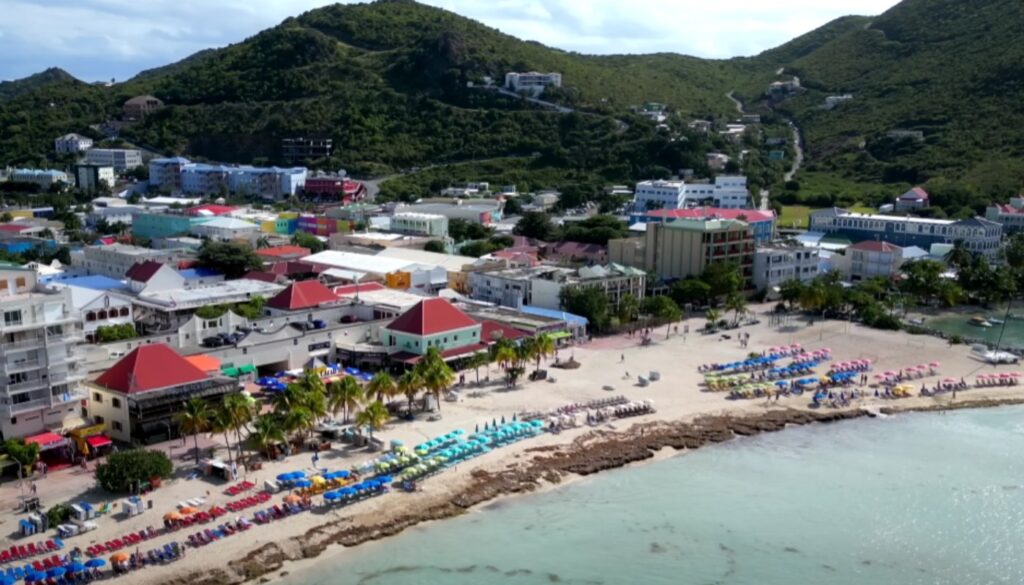
The cost of owning property in St Maarten is lower than most buyers expect, because the Dutch side charges no annual property tax. Your real yearly costs are HOA or condo fees, hurricane insurance, electricity and water, and upkeep. Closing runs about 4 to 6 percent up front, paid by the buyer. The French side of Saint-Martin adds annual taxes and higher holding costs.
- The Dutch side of St Maarten has no annual property tax; you pay closing costs of about 4 to 6 percent once, at purchase.
- Your yearly costs are driven by condo or HOA fees, hurricane insurance, electricity and water, and maintenance, not by a tax bill.
- The French side (Saint-Martin) costs more to hold than Sint Maarten, with annual taxes and transaction costs often 7 to 8 percent.
- The seller usually pays the agent commission, so buyers do not add that to the purchase price. Confirm it in writing anyway.
How much does it cost to own property in St Maarten each year?
The cost of owning property in St Maarten breaks into two parts: a one-time closing cost of roughly 4 to 6 percent when you buy, then yearly holding costs that are driven by insurance, utilities, and upkeep rather than by a tax bill. On the Dutch side there is no annual property tax, so your recurring bills are HOA or condo fees, insurance, utilities, and maintenance.
I live on the Dutch side and I walk buyers through this regularly. The first thing I do is split the numbers into money you pay once and money you pay every year, because those two get blurred together in a lot of the advice you will find online. The upfront closing cost is the big line at purchase. After that, the recurring bills often come in lighter than what buyers are used to at home, mainly because there is no yearly property tax bill waiting for you.
Your annual cost depends far more on the type of property than on the purchase price. A condo in a managed building near Simpson Bay or Cupecoy carries an HOA fee that a standalone villa does not. A hillside home with a pool and a cistern carries its own upkeep instead. I am not going to publish an average yearly figure for the island, because an average across studio condos and Terres Basses villas tells you nothing useful about the home you are actually looking at. Send me the specific listing or building and I will pull the real dues, the real insurance exposure, and a realistic power estimate for it.
Here is the shape of a Dutch-side ownership budget:
- Once, at purchase: transfer tax, the notary fee, and any bank or valuation costs if you finance.
- Every year: HOA or condo dues if you are in a building, hurricane and property insurance, electricity and water, and maintenance.
- Never: an annual property tax bill on the Dutch side.
Do you pay annual property tax in St Maarten?
No. On the Dutch side of St Maarten there is no annual property tax on your home. This is one of the real financial advantages of buying here, and it surprises most US and Canadian buyers who are used to a yearly property tax bill back home.
That said, no property tax does not mean no annual cost. You still pay for insurance, utilities, and upkeep, and if you rent the property out there can be tax on that rental income. Ownership structures, rental income, and any future change to local rules are exactly the kind of thing to confirm with your notary or a local tax advisor rather than take from a blog, including mine. I am an agent, not a tax advisor, and the honest answer to what will I owe is that it depends on how you hold the property and what you do with it.
The missing property-tax bill is the line buyers notice first when they compare holding a home here with holding one back home. I still tell every client to verify their own position with their notary, because how you hold title and whether you rent the place out can change the picture.
Two questions are worth asking before you bank on the savings. First, does the way you plan to hold title change anything for you. Second, does renting the home shift you into different treatment. Both are notary and tax advisor questions, and both are worth asking before you sign rather than after. What I can tell you with confidence is the part I see every week: there is no annual property tax bill arriving on the Dutch side, and that changes how buyers think about carrying a home here for the long run.
What are the upfront closing costs when you buy?
Closing costs on the Dutch side generally total about 4 to 6 percent of the purchase price, and the buyer pays them. That is roughly 4 percent transfer tax plus about 1 to 1.5 percent for the civil-law notary, who is mandatory and handles the title search, deed, escrow, and registration. Your notary will confirm the exact figures for your specific transaction.
The notary is also why buyers here do not use US-style title insurance. On SXM the notary is a neutral public officer who verifies clean title and registers the deed, so that protection is built into the process instead of sold to you as a separate policy. The seller usually pays the real estate agent commission, which means the 4 to 6 percent above is close to your full transaction cost as a buyer. Get the commission arrangement in writing anyway, because usually is not always, and I would rather you see it on paper than assume it.
| Upfront cost | Who pays | Typical amount (Dutch side) |
|---|---|---|
| Transfer tax | Buyer | About 4% of price |
| Notary fee | Buyer | About 1% to 1.5% |
| Agent commission | Seller (usually) | $0 to the buyer |
| Title insurance | Not used here | $0, the notary handles title |
For the full walk-through of the offer, escrow, and notary steps, see my guide to buying property in St Maarten. Financing is available for qualified foreign buyers with a down payment, and some of my international buyers choose to pay cash instead. If you plan to finance, ask early what a lender here wants from a non-resident applicant, because that answer shapes your timeline more than anything else in the deal. Timelines vary with price, condition, and financing, and I will give you a realistic range for the specific property you are looking at rather than a number pulled out of the air.
What does it really cost to own a condo in St Maarten?
A condo carries a recurring cost a standalone house does not: the HOA fee, which usually bundles building insurance, security, pool and grounds upkeep, and often water. Whether that lands above or below the upkeep on a house depends entirely on the building. Expect four recurring line items: association dues, your own contents insurance, electricity, and a maintenance reserve.
The HOA is the number to scrutinize before you buy. In some Cupecoy and Maho buildings the monthly dues cover the master insurance policy, which matters enormously in a hurricane zone, plus round-the-clock security and a funded reserve for the roof and the elevators. In other buildings the dues look attractively low because the reserve is underfunded, and that catches up with owners as a special assessment. I always ask to see the association budget and the reserve balance, not just the headline monthly figure.
These are the questions I put to a building on your behalf before you commit. What does the master policy actually cover, and what is the deductible in a named storm. When was the roof last done. Has there been a special assessment recently, and is another one coming. Is the reserve funded, or is the building running on optimism. What happens to your dues if a big-ticket repair lands next season. A building with higher dues and a healthy reserve is very often the cheaper building to own over time, which is the opposite of what the listing page suggests.
Electricity is the line that shocks newcomers, because power here is expensive compared with what most US and Canadian buyers are used to paying. Air conditioning is the biggest driver of that bill, so a well-shaded unit with good cross-breeze can cost meaningfully less to run than a west-facing glass box that bakes all afternoon. That is one of the things I look at when we walk a unit together. I break down power, water, and grocery costs in my guide to utilities and groceries in St Maarten.
Dutch side vs French side: which is cheaper to own?
The Dutch side of Sint Maarten is generally cheaper to buy and to hold. Closing costs run about 4 to 6 percent, and there is no annual property tax. The French side of Saint-Martin follows French and EU rules, with transaction costs often 7 to 8 percent plus annual taxes, so your yearly carrying cost is higher. How those French rules apply to you personally is a question for a notary on that side, not for me.
| Cost factor | Dutch side (St Maarten) | French side (Saint-Martin) |
|---|---|---|
| Closing costs | About 4% to 6% | Often 7% to 8% |
| Annual property tax | None | Yes, annual taxes apply |
| Currency in daily use | US dollar | Euro |
| Foreign ownership | Freehold, no restriction | French and EU rules apply |
There is no border checkpoint, so plenty of my clients own on one side and shop, dine, or swim on the other the same afternoon. The whole island is about 87 sq km, roughly 34 sq km on the Dutch side and about 53 sq km on the French side, which is why the other side is never really far away. The French side has genuine draws: Grand Case as a dining village, Orient Bay, and the quiet of Terres Basses. But on pure cost of ownership, the Dutch side wins on both the upfront percentage and the annual carry. I compare the two governments, currencies, and lifestyles in more depth in St Maarten vs St Martin.
How do insurance and utilities shape your holding costs?
Insurance and utilities are the two holding costs that catch buyers off guard. St Maarten sits inside the hurricane belt, Hurricane Irma hit in September 2017, and insurers price wind risk into every policy written here. Electricity and water are expensive island-wide, and both belong in your yearly budget from day one.
The house is the cheap part. Insuring it against a storm and keeping the lights on is where your yearly budget really goes.Wei Landgraf, Dutch-side resident agent
The upside is that construction standards improved after Irma. Newer and rebuilt homes were built to tougher standards, and stronger construction can lower both your risk and, in some cases, your premium. Ask your insurer what a specific building qualifies for, because the answer is property by property and I am not going to guess at your premium from a listing photo.
What I tell every buyer to do: get an insurance quote on the actual property before you are past the point of no return, ask what the named-storm deductible is instead of looking only at the annual premium, and check whether a condo's master policy leaves you a gap you have to fill yourself. Ask about water too, since a house on a cistern and a unit on building-supplied water behave very differently in a dry stretch. If you want to be fully outside the storm zone you would look at an island like Aruba, which sits outside the hurricane belt, but you give up the two-nation setup and the hub airport at Princess Juliana that make SXM so livable. For a wider look at monthly budgets, see my cost of living in St Maarten breakdown.
Is the cost of owning property in St Maarten worth it?
For most buyers, yes, the cost of owning property in St Maarten is worth it, because the absence of annual property tax and the freehold ownership on the Dutch side offset the higher insurance and utility bills. The math works best if you plan to use the home often, or rent it out when you are away.
Where it gets less attractive is a low-use second home in a building with weak reserves. You carry the insurance, the dues, and the standing electricity charges for a place you rarely see, and the joy drains out of it. That is a real scenario, and I steer people away from it. The strong case is an owner who visits for several months a year, or who rents through the busy winter season to help offset the annual carry. I will not put a yield number on that here, because it depends on the building, the rental rules, the management cut, and how many weeks you keep for yourself. Give me the building and I will show you what owners there actually deal with.
Financing exists for qualified foreign buyers with a down payment, and paying local bills gets simpler once you set up banking in St Maarten. Day to day you will be spending US dollars on the Dutch side, which removes one layer of friction for American buyers. My honest summary: the closing is cleaner thanks to the notary, and the yearly cost is reasonable as long as you budget for insurance and power instead of a property-tax bill. Confirm the legal and tax details with your notary and your own advisor, and let me handle the part I actually know, which is what a specific property costs to own once you have the keys.
Frequently Asked Questions
Does St Maarten have annual property tax?
No, the Dutch side of St Maarten does not charge an annual property tax on your home. That is a genuine advantage over most US and Canadian markets. You still budget for insurance, utilities, and maintenance every year, and you should confirm your own tax position, especially on rental income, with a local tax advisor or your notary rather than relying on a blog.
How much are closing costs when buying property in St Maarten?
Closing costs on the Dutch side generally run about 4 to 6 percent of the purchase price, paid by the buyer. That is roughly 4 percent transfer tax plus about 1 to 1.5 percent for the mandatory civil-law notary. The seller usually pays the agent commission, so that percentage is close to your full buyer cost. Your notary will confirm the exact figures for your transaction.
Who pays the real estate agent commission in St Maarten?
On the Dutch side of St Maarten, the seller usually pays the real estate agent commission. For a buyer, that means representation does not add a separate fee on top of your purchase, and your main costs are the transfer tax and the notary fee. Always confirm the arrangement in writing before you sign anything, because usually is not always.
What does it cost to own a condo in St Maarten each year?
Annual condo costs in St Maarten center on the HOA fee, which often bundles building insurance, security, pool and grounds upkeep, and sometimes water. On top of that you budget for your own electricity, contents insurance, and a maintenance reserve. Ask for the association budget and the reserve balance before you buy, not just the monthly dues, and send me the building if you want the real numbers on it.
Is it cheaper to own property on the Dutch or French side?
The Dutch side is generally cheaper to own. St Maarten has closing costs of about 4 to 6 percent and no annual property tax, while the French side of Saint-Martin often runs 7 to 8 percent in transaction costs plus annual taxes. The Dutch side uses the US dollar day to day, the French side uses the euro. For how the French rules would apply to you, ask a notary on that side.
Can foreigners own property in St Maarten?
Yes. On the Dutch side there is no restriction on foreign ownership, and you buy freehold, the same title a local holds. A civil-law notary handles the deed, title search, and registration. Buying property is not the same as getting residency. Tourists from the US, Canada, the UK, and the EU can generally visit visa free for up to 90 days on a valid passport, and longer stays require a residence permit, so confirm your own situation with an immigration advisor or your notary before you plan a full-time move.
