
St Maarten vs Aruba: Which Dutch Caribbean Island Should You Buy On? (2026)
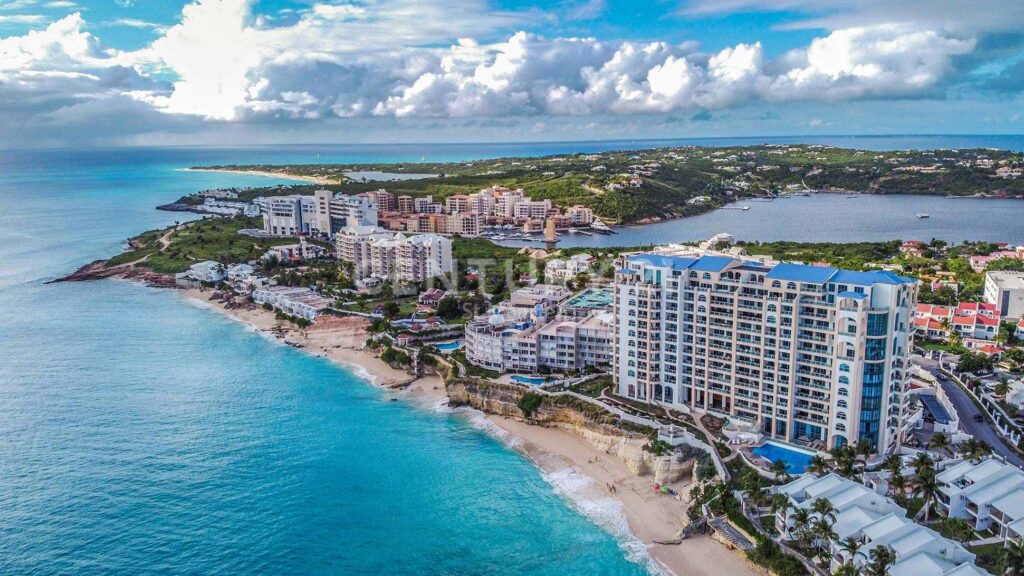
St Maarten and Aruba are both Dutch Caribbean islands where Americans and Canadians can buy freely and spend in US dollars. Aruba is drier, calmer, and sits outside the hurricane belt. St Maarten gives you two countries on one island, a major airport hub, lower entry prices, and no annual property tax, in exchange for hurricane exposure.
- Weather: Aruba is outside the hurricane belt; St Maarten is inside it (Irma hit in 2017).
- Money: both use the US dollar in practice; both allow full foreign ownership.
- Cost to own: St Maarten has lower entry prices and no annual property tax on the Dutch side.
- Access: St Maarten's Princess Juliana is one of the region's busiest hubs with direct US and European flights.
St Maarten vs Aruba at a glance
Before the detail, here is the shape of the decision. Both islands are constituent countries of the Kingdom of the Netherlands, both run on the US dollar day to day, and both let foreigners buy property outright. The differences that actually change your life are weather risk, how much you pay to own, and what the island feels like.
| St Maarten (Dutch side) | Aruba | |
|---|---|---|
| Country status | Autonomous country, Kingdom of the Netherlands | Autonomous country, Kingdom of the Netherlands |
| Size | Shares an 87 sq km island with France | About 180 sq km, single island |
| Hurricane belt | Inside the belt | Outside the belt |
| Currency in practice | US dollar (official: Antillean guilder) | US dollar (official: Aruban florin) |
| Main language | English | Papiamento, Dutch, English, Spanish |
| Foreign ownership | Allowed, no restriction | Allowed, no restriction |
| Annual property tax | None on the Dutch side | Land tax applies above a threshold |
| Main airport | Princess Juliana (SXM), major hub | Queen Beatrix (AUA), strong US links |
Weather and hurricane risk: the deciding factor
If one thing splits these islands, it is storms. Aruba sits far south, around 12 degrees north, well below the main hurricane track. It is arid, sunny nearly year round, and rarely takes a direct hit. St Maarten sits around 18 degrees north, squarely inside the belt, and in September 2017 took a direct Category 5 strike from Hurricane Irma.
That history scares buyers, and it should be respected, not dismissed. What it does not mean is that St Maarten is a bad place to own. Construction standards jumped after Irma, insurance is available, and solid concrete condo buildings came through recent seasons well. It is a cost and a planning item, the same way flood zones are on the US coast.
Aruba buys you peace of mind on weather. St Maarten asks you to insure and build smart, and pays you back with two cultures and cheaper ownership.Wei Landgraf, Dutch-side resident agent
If hurricane anxiety would keep you up at night, Aruba is the honest answer. If you can price insurance in and buy a well-built concrete unit, St Maarten's upside is hard to beat.
Cost of living and property prices
Both islands import almost everything, so groceries, utilities, and dining run above US mainland prices on either one. Day to day, budgets land in a similar range. Where they separate is the cost to buy and hold real estate.
St Maarten's Dutch side tends to have lower entry prices than Aruba's established resort market, and crucially there is no annual property tax. Aruba is more expensive to buy into and charges an annual land tax above a threshold. Over a decade of ownership, that recurring tax difference adds up.
None of this makes either island cheap. Both are premium Caribbean markets. But for a first purchase where budget and flexibility matter, the Dutch side usually gives you more square footage and lower carrying costs for the money. For current listings and price bands, see my St Maarten real estate overview.
Buying property: rules, costs, and process
Good news for Americans and Canadians: neither island restricts foreign ownership. You can own freehold in your own name on both.
On the St Maarten Dutch side, a civil-law notary handles the entire transfer, from title search to registration, and total closing costs run about 4 to 6 percent of the purchase price, paid by the buyer. There is no annual property tax afterward. Aruba also uses a notary system, with transfer tax and notary fees at closing, plus that recurring annual land tax.
| Cost | St Maarten (Dutch side) | Aruba |
|---|---|---|
| Foreign ownership | Freehold, no restriction | Freehold, no restriction |
| Closing costs | About 4 to 6% (buyer) | Transfer tax plus notary (buyer) |
| Annual property tax | None on the Dutch side | Land tax above a threshold |
| Financing for foreigners | Available with a down payment | Available with a down payment |
Get a written notary estimate on either island before you wire anything. Rates and small line items shift, and a round number is not a quote. On the St Maarten side I walk buyers through this in my buying guide and closing-costs breakdown.
Which island fits which buyer?
Rather than crown a single winner, match the island to the person. After years of showing clients both options, here is how it usually shakes out.
- The weather-first retiree: Aruba. No hurricane season anxiety, stable and polished, easy US flights.
- The value-focused buyer: St Maarten. Lower entry price, no annual property tax, more home for the money.
- The rental investor: St Maarten edges it on flight volume and dual-culture demand, though both islands rent well.
- The two-cultures lifestyle buyer: St Maarten, clearly. Dutch practicality and French food and beaches on one small island is a combination Aruba cannot match.
- The first-time Caribbean buyer who wants simple: Aruba for predictability, St Maarten if you want the US dollar plus English plus a residence-permit path.
If relocation is the real goal, the Dutch side has a workable residence-permit route that I documented after doing my own. Start with moving to Sint Maarten.
Living day to day: culture, language, and healthcare
Aruba feels uniform in the best sense: one culture, Papiamento and English and Spanish widely spoken, reliable infrastructure, and a tourism economy that runs like clockwork. St Maarten feels layered. You can do a Dutch-side morning of shopping and casinos and a French-side evening of barefoot fine dining in Grand Case, all within a 20-minute drive and with no border checkpoint.
Healthcare exists on both, with more complex cases often referred off-island to Colombia, the US, or the Netherlands. English is easy everywhere on St Maarten, which many North American buyers find lowers the friction of settling in. For the Dutch-side specifics on insurance and care, see my notes on SZV health insurance.
The honest summary: Aruba is the safer, calmer, more predictable island. St Maarten is the richer, more varied, better-value island that asks you to plan for weather. Neither is wrong. It depends on which trade-off you would rather live with.
Frequently Asked Questions
Is St Maarten or Aruba cheaper to buy on?
St Maarten's Dutch side is generally cheaper to buy into, with lower entry prices and no annual property tax. Aruba costs more up front and charges an annual land tax above a threshold, so St Maarten is usually cheaper to both buy and hold.
Which island has better weather?
Aruba. It is drier, sunnier year round, and sits outside the hurricane belt. St Maarten is greener with more rain and is inside the belt. If weather safety is your top priority, Aruba wins.
Can Americans and Canadians buy property on both islands?
Yes. Both Aruba and the St Maarten Dutch side allow full freehold foreign ownership with no restriction. Purchases go through a local notary, and financing is available to qualified foreign buyers with a down payment.
Which is better for retirement?
Aruba suits retirees who want stability and no hurricane worry. St Maarten suits those who want two cultures, the US dollar, English everywhere, no annual property tax, and a residence-permit path on the Dutch side.
Do both islands use the US dollar?
In practice, yes. Aruba's official currency is the florin and St Maarten's is the Antillean guilder, but both are pegged near the dollar and US dollars are accepted everywhere on both islands.
Which island is easier to fly to from the US?
Both have strong US links, but St Maarten's Princess Juliana Airport is one of the busiest hubs in the northeast Caribbean, with frequent direct flights from the US and Europe, which also supports rental demand.
Whatever brought you to this page, the practical order is usually the same. Documents come first, and they are simpler than they look: check whether you need a passport for entry, then file the free digital embarkation card, which every arriving traveller must complete and which several paid lookalike sites will charge you thirty dollars to submit on your behalf. After that comes a real stay rather than a resort week — ten days somewhere teaches you more about traffic, noise and the walk to a supermarket than any viewing will. Test the busy end of the island from a marina-view apartment on the Simpson Bay strip, or the quiet end from a quieter condo in Cupecoy.
Only then does property become a useful conversation. First-time buyers often look east, where a two-bedroom apartment in Point Blanche sits minutes from Philipsburg and the cruise port without carrying Cupecoy pricing. If you are certain about the island but not the neighbourhood, rent for a year first — a three-bedroom penthouse in Cupecoy, furnished with a private pool near CIA, AUC and Mullet Bay, is built for exactly that look-around. Commercial buyers are a separate case: the Front Street retail space in Philipsburg is a fitted 140 m² showroom on the cruise-passenger corridor, and spaces there rarely come up ready to trade.
One thing sits outside all of this and derails more plans than anything else. If you are retiring here, settle healthcare before you shortlist a single property, because Medicare will not cover you here and the private cover that replaces it is a fixed annual cost that belongs in your budget from the start. Work out that number first, then look at houses. When you are ready to turn a budget into specific
