
Do You Need a Passport to St Maarten? Entry Rules (2026)
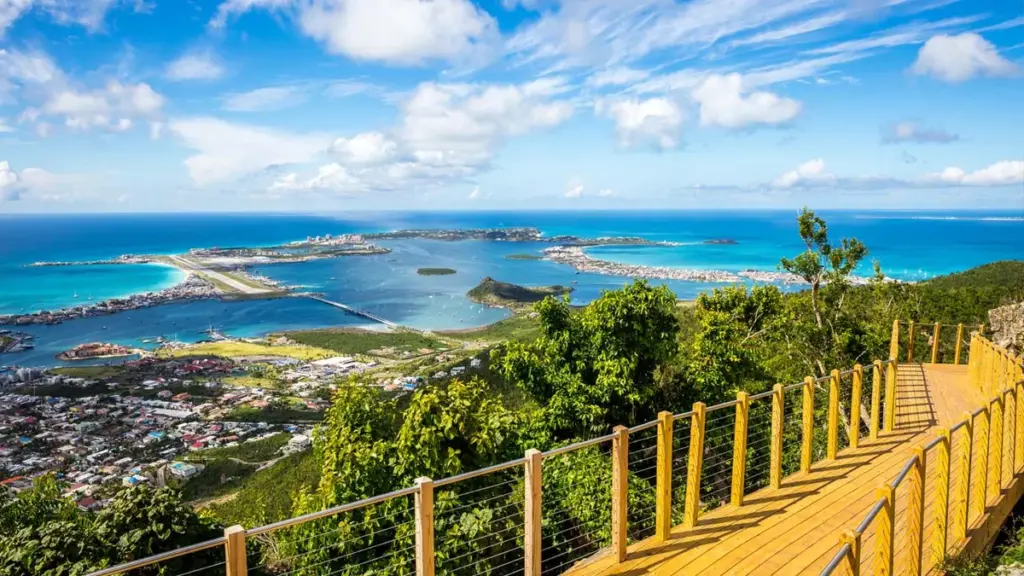
Do you need a passport to St Maarten? Yes. Every traveler needs a valid passport, but US, Canadian, UK, and EU visitors get up to 90 days with no visa. There is no border checkpoint between Dutch Sint Maarten and French Saint-Martin, so one passport covers both nations. Staying beyond 90 days means a residence permit, so confirm the current rules with immigration before you rely on them.
- A valid passport is required for US and Canadian travelers, and no visa is needed for tourist stays of up to 90 days.
- One island, two countries: Dutch St Maarten and French Saint-Martin, with no border control between them.
- Princess Juliana Airport (SXM) sits on the Dutch side and is the island's international gateway, with direct US and European flights.
- Living or working here beyond 90 days means a residence permit rather than a tourist entry, so check the current rule with a qualified immigration advisor before you plan around it.
Do you need a passport to St Maarten?
Yes. You need a valid passport to enter St Maarten, whether you land on the Dutch side or head for the French side. US, Canadian, UK, and EU citizens do not need a visa for tourist stays of up to 90 days. The passport is the one document you cannot skip.
I live on the Dutch side, and the question I hear most from clients before they fly down is whether they need anything beyond a passport. For a normal visit, they do not. A tourist stamp on arrival gives US, Canadian, UK, and EU travelers up to 90 days. What trips people up is passport validity: requirements vary by airline and can change, so check the expiration date and confirm what your airline requires before you book, not at the gate. If your passport is anywhere close to expiring, renew it while you are still planning the trip, because that is the one problem nobody can solve for you at a check-in counter.
For a standard tourist trip, US, Canadian, UK, and EU visitors do not need a visa. Other entry formalities can change, so check the current requirements with your airline or a qualified immigration advisor before you fly. If you are here for a week of beaches and dinners, your valid passport is the document you cannot skip, and your airline can tell you what else it wants to see. For anything longer than a visit, the rules change, and I cover that below.
St Maarten vs St Martin: what is the difference?
St Maarten is the Dutch southern half of the island; Saint-Martin is the French northern half. St Maarten covers about 34 square kilometers under the Kingdom of the Netherlands and runs on the US dollar day to day, with the Antillean guilder as the official currency. Saint-Martin covers about 53 square kilometers, belongs to France and the EU, and uses the euro.
| Feature | St Maarten (Dutch) | Saint-Martin (French) |
|---|---|---|
| Nation | Kingdom of the Netherlands | France (EU) |
| Size | About 34 sq km | About 53 sq km |
| Everyday currency | US dollar | Euro |
| Capital | Philipsburg | Marigot |
| Main airport | Princess Juliana (SXM) | No major international airport |
| Passport to visit | Required | Required |
This is the single biggest confusion I clear up. The whole island is 87 square kilometers, one landmass, two nations. Spelling is the quick tell: the "Maarten" spelling is the Dutch side, and "Martin" is the French side. For entry purposes it rarely matters which half you are aiming for, because a passport gets you into either and there is no checkpoint between them. Where the two systems really diverge is money, taxes, and buying property.
That split is worth understanding even if you are only visiting, because it quietly decides where people end up living. On the Dutch side there is no restriction on foreign ownership, a civil-law notary is mandatory on every sale and handles the title search, deed, escrow, and registration, buyer closing costs run about 4 to 6 percent of the price (roughly 4 percent transfer tax plus about 1 to 1.5 percent notary fee), and there is no annual property tax. The French side is generally more expensive to buy and to hold, with transaction costs often 7 to 8 percent plus annual taxes. Confirm any figure that applies to your own purchase with your notary and tax advisor, because your situation drives the final number. Neither side is right or wrong, they are different systems, and lifestyle usually decides before the spreadsheet does. I break the full split down in my St Maarten vs St Martin comparison, and it is worth reading before you choose which side to base yourself on.
How long can you stay in St Maarten without a visa?
US, Canadian, UK, and EU tourists can stay up to 90 days in St Maarten on a valid passport with no visa. That window is meant for tourism. If you plan to live, work, retire, or run a business here beyond 90 days, you apply for a residence permit through the local immigration authorities, and you should confirm the current process and timing with a qualified immigration advisor rather than assuming anything.
The 90-day tourist entry is generous, and plenty of my clients use a long visit to test the island before committing to anything. Honestly, that is the smartest thing you can do. A week tells you the beaches are good. Six weeks tells you whether you can live with supermarket prices, the ferry and flight schedules, the occasional power cut, and the pace of a small island where everybody recognises your rental car. A tourist entry is not a work or residence status, and that is not a line I can draw for you, so confirm what you can and cannot do with a qualified immigration advisor. If you are seriously weighing a move, my guide on moving to SXM walks through the permit path, banking, and what to line up first.
One practical note: do not assume that driving to the French side resets any clock. How your days are counted, and how time on the French side is treated, is not something I can rule on, so confirm it with a qualified immigration advisor before you plan a long stay. What I can tell you from watching people go through it is that the ones who end up settled started the residence conversation early, kept clean paperwork, and did not improvise at the tail end of a long visit. I walk buyers and renters through this regularly, and the paperwork is never the part that ruins a plan when it is started on time.
What are the best things to do in St Martin and St Maarten?
The island packs beaches, dining, and plane spotting into 87 square kilometers. On the Dutch side, Maho Beach is famous for jets landing directly overhead. On the French side, Grand Case is the food capital, known for Creole lolos and French bistros. The two halves sit close enough together that most visitors see both on the same trip.
When friends visit, I send them across both sides on purpose, because the two halves feel different. The Dutch side leans toward marinas, casinos, and the buzz around Simpson Bay and Maho. The French side is quieter and slower, built around long lunches, market mornings in Marigot, and clothing-optional stretches of sand that put some people off and delight others. The food of St Martin is the real draw up north: the lolos are open-air barbecue stands serving ribs, grilled snapper, johnnycakes, and rice and beans at honest prices, while Grand Case also has white-tablecloth French kitchens a few steps away.
If you only do one cross-island trip, make it lunch at a Grand Case lolo followed by an afternoon at Orient Bay. It is the fastest way to feel why people fall for this island, and it costs you nothing but gas and a good appetite.
Get off the sand and the island opens up further. Boats run out to Creole Rock for snorkelling, to the quiet beaches of Tintamarre, and across to Anguilla for a day trip. The reefs off the east coast, the trade winds that keep the evenings bearable, and the old Mullet Bay golf grounds round out a first visit. For a first trip, plan your things to do in St Martin and St Maarten around a simple loop: Maho for planes, the Philipsburg boardwalk for shops, the Marigot market on the French side, and a beach day at Orient Bay. None of it requires a passport check between stops.
Do you need your passport to cross between the Dutch and French sides?
No. There is no border checkpoint between St Maarten and Saint-Martin. You cross by driving down the road, often marked only by a small monument or a change in the signs and the license plates. You will not show a passport. Keep it safe where you are staying, and carry a photo ID instead.
This surprises almost everyone. You can eat a Dutch-side breakfast in Simpson Bay and a French-side dinner in Grand Case without a single document check in between. The border is famously casual: a welcome monument on the roadside is often the only sign you switched countries, and over on the east coast it runs straight through the Oyster Pond area, where one small harbour touches both nations. The thing to watch is currency: the French side runs on euros, so carry a card or some euros when you cross. On the Dutch side, the US dollar is what you will use day to day, even though the official currency is the Antillean guilder.
You need a passport to reach the island, not to cross it. Once you land, both halves are a short drive apart with nothing but a monument between them.Wei Landgraf, Dutch-side resident agent
What documents do US and Canadian travelers need for St Maarten?
US and Canadian travelers need a valid passport, and no visa is required for tourist stays of up to 90 days. Airlines and immigration officers may also ask for things like onward travel or the address where you are staying, so confirm the current requirements with your airline or a qualified immigration advisor before you fly.
Here is the short list I talk through with visiting clients:
- Valid passport: the one document you cannot skip. Check the expiry date early and confirm what your airline expects to see.
- Return or onward travel details: commonly requested, so keep the booking somewhere you can pull it up quickly rather than buried in an inbox.
- Accommodation address: the hotel, villa, or rental where you will stay, written down and not just in someone's head.
- A payment card and some cash: US dollars work day to day on the Dutch side, and a card or euros will cover you on the French side.
Entry rules can change, so verify the current passport-validity and onward-travel requirements with your airline or a qualified immigration advisor before you fly. Do not rely on a forum post, or on what a friend did a couple of years ago. If your visit is really a scouting trip for a longer stay, it is worth reading up on the cost of living in St Maarten so the numbers are not a shock when you come back. It is also worth landing at SXM with a list of neighbourhoods to see rather than a vague plan to look around. I show clients the island regularly, and the trips that turn into good decisions are always the ones with a plan behind them.
Frequently Asked Questions
Do I need a passport for St Maarten?
Yes. You need a valid passport to fly into St Maarten, no matter your nationality. US, Canadian, UK, and EU citizens do not need a visa for tourist stays of up to 90 days. Airlines and immigration officers may ask for other things, such as onward travel or where you are staying, so confirm the current requirements with your airline before you fly.
Do US citizens need a visa for St Maarten?
No. US citizens do not need a visa to visit St Maarten for tourism. A valid passport covers tourist stays of up to 90 days. If you plan to spend significant time on the French side, or to stay longer than 90 days to live, work, or retire here, confirm how that is treated with a qualified immigration advisor, because a longer stay means a residence permit.
What is the difference between St Maarten and St Martin?
St Maarten is the Dutch southern half of the island under the Kingdom of the Netherlands, about 34 square kilometers, using the US dollar day to day. Saint-Martin is the French northern half, about 53 square kilometers, part of France and the EU, using the euro. They share one 87 square kilometer island with no border checkpoint between them.
Do you need a passport to go to the French side of St Martin?
You need a passport to reach the island, but not to cross onto the French side once you are there. There is no border control between Sint Maarten and Saint-Martin. You drive across freely, so you can have lunch in Grand Case and be back on the Dutch side for dinner the same day.
Can Canadians travel to Sint Maarten without a visa?
Yes. Canadian citizens can travel to Sint Maarten without a visa for tourist stays of up to 90 days, using a valid passport. Confirm your passport meets your airline's validity rules before booking, and verify current entry requirements with your airline or a qualified immigration advisor, since rules can change.
Is Princess Juliana Airport on the Dutch or French side?
Princess Juliana International Airport (SXM) sits on the Dutch side of the island, in Sint Maarten. It is the major regional hub, with direct flights from the US and Europe. Almost every visitor to either side lands at SXM, because it is the island's international gateway.
