
Moving to St Maarten From the US: A Realtor's Guide (2026)
Moving to St Maarten from the US starts with a valid passport, which gets you up to 90 visa-free days. To stay longer or work, you apply for a residence permit. Buying is open to foreigners on the Dutch side, with no annual property tax. The US dollar is used daily, Princess Juliana airport has direct US flights, and I live on the Dutch side.
- A US passport gives you up to 90 days visa-free; longer stays need a Sint Maarten residence permit, so confirm the current rules with an immigration advisor.
- The Dutch side has no annual property tax and no restriction on foreign ownership of freehold property.
- Princess Juliana (SXM) is a major regional hub with direct flights to US and European cities.
- Daily life on the Dutch side runs on US dollars, so most purchases need no currency conversion.
How do I move to St Maarten from the US?
Moving to St Maarten from the US comes down to three steps: enter on your US passport for up to 90 days, decide whether you are renting or buying, and apply for a residence permit if you plan to stay past 90 days or work. I moved to the island in 2023, I live on the Dutch side, and I walk US movers through this sequence regularly.
The practical order I give clients is simple. Come down first and spend real time here, because the island reads very differently on a vacation than it does when you are handling groceries, internet, a car, and a bank appointment. Rent before you buy, so you learn which part of the island actually fits your routine and your budget. Then, once you are sure, run the residence paperwork and the property search in parallel instead of one after the other.
One thing that surprises Americans: there is no single US-style relocation agency that does everything here. You work with a civil-law notary for the property side, an immigration advisor or attorney for the permit side, and an agent like me for the housing and the ground-level questions. Those tracks run on their own clocks and they do not wait for each other, so do not count on a fast turnaround, and ask an immigration advisor what current processing times look like before you set a move date or give notice on a job. I lay out the sequence in my full moving to SXM guide.
Before you book a one-way flight, get honest with yourself about four things. Are you working remotely, retiring, or looking for work on the island, because that changes your permit path entirely. Are you shipping a car and furniture, or arriving light and buying here. Do you need schools. Do you want to be near the marinas and the restaurants, or up a hill with a view and a longer drive to everything. None of those have a single right answer, and the honest way to find yours is to be here for a while with a rental, a rental car, and a willingness to ask locals the boring questions.
Do I need a visa or residence permit to live in Sint Maarten?
US citizens do not need a visa to enter Sint Maarten. Your valid US passport allows a stay of up to 90 days. To live here, work, or stay longer, you apply for a residence permit through the Dutch-side immigration authority. Requirements and processing times change, so confirm the current rules with an immigration advisor before you rely on them, including anything you read on this page.
| Option | What it covers |
|---|---|
| Tourist entry | US passport, no visa, up to 90 days |
| Residence permit | Required to live, retire, or stay beyond 90 days |
| Work permit | Requirements depend on your situation; confirm with an immigration advisor |
| Property ownership | Open to foreigners on the Dutch side; a separate process from immigration |
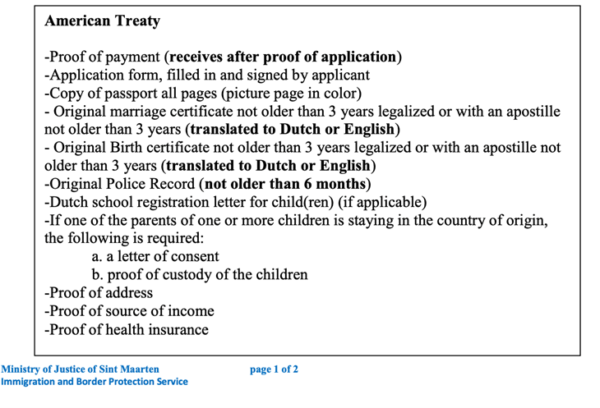
A point I make constantly: do not assume that buying a house here settles your immigration status. Ownership and residency are handled through different processes, and how they interact in your case is a question for an immigration advisor, not for me. What I can tell you from the ground is that some people own here and still come and go as visitors, and some people rent here and hold a permit. I point US clients to the US citizen residence permit steps so they know what tends to get asked for, then I hand them to someone qualified to actually file it.
Practical advice from watching people do this: start the permit conversation earlier than feels necessary, keep clean copies of everything you might be asked for (passport, background check, proof of income, birth and marriage certificates), and expect documents to be wanted in a specific form. Nothing on the immigration side speeds up because you are in a hurry, and no part of moving to Sint Maarten is helped by treating the paperwork as an afterthought. Plan the housing around the permit timeline, not the other way around.
How much does it cost to move and live in St Maarten?
Budgeting for a move to Sint Maarten has two parts: the one-time cost of getting here and buying, and the ongoing cost of living. On the Dutch side, closing costs run about 4 to 6 percent of the purchase price, there is no annual property tax, and daily spending is in US dollars.
Here is how the closing math works when you buy on the Dutch side. Expect roughly 4 percent transfer tax plus about 1 to 1.5 percent for the notary, all paid by the buyer. Rates and what applies to your specific deal are worth confirming with your notary and your tax advisor before you sign anything. The seller usually covers the agent commission, so my fee is not an extra line on your side. A civil-law notary is mandatory on every deal, and that notary runs the title search, holds escrow, prepares the deed, and registers you as the owner. That is why US-style title insurance is not the norm here: the notary system carries that job. Financing exists for qualified foreign buyers who bring a down payment, though the terms are set by the local lender, so ask a bank here what it would take in your case. I walk through the full process in buying property in St Maarten.
Living costs are the other half of the picture. In my experience, groceries, electricity, and water cost more here than most US movers expect, since nearly everything is imported and power is generated on the island. Rent, dining, and fuel swing a lot by neighborhood and by how you actually live. I break the monthly categories down in my St Maarten cost of living guide so you can pressure-test your budget before you commit to anything.
The line item people forget is the carrying cost of a home here, separate from any mortgage: insurance in a hurricane zone, association fees on a condo, upkeep on anything exposed to salt air, and the cost of backup water and power if you want the house to keep running when the grid does not. Those numbers differ wildly between a lock-and-leave condo and a villa with a pool and a generator, so I do not guess at them in a blog post. Send me the building or the property you are looking at and I will get you the real figures for that specific place before you make an offer.
What is daily life in St Maarten like compared to the US?
Day to day, the biggest shifts from the US are money, distance, and pace. On the Dutch side you spend US dollars even though the official currency is the Antillean guilder, so there is no daily conversion to think about. You can drive across to the French side, Saint-Martin, with no border checkpoint, and flights home are direct.
The two-nation setup is the island's best feature and the most confusing thing on paper. I do my grocery run on the Dutch side in dollars, then have dinner in Grand Case on the French side in euros, a short drive apart, with no passport stamp. Keep a card that handles both currencies with low fees and you stop thinking about it.
The French north, Saint-Martin, runs on the euro and under French and EU rules. It is generally more expensive to buy and to hold: transaction costs often land around 7 to 8 percent, and there are annual taxes the Dutch side does not charge. Plenty of Americans still choose the French side for the food and the beaches, they just go in knowing the carrying cost is higher. If tax treatment is going to drive your decision, and for most US movers it does, take that question to a tax advisor who handles both jurisdictions before you pick a side.
On flights, Princess Juliana (SXM) sits on the Dutch side and is a major regional hub with direct service to US and European cities. That matters more than people expect when you are moving from the US, because reaching the mainland without a connection changes how often you see family. And yes, Maho Beach really does have jets landing low over your head, which is either a novelty you show every visitor or a reason to buy somewhere else.
The rest of daily life is small stuff that adds up. The whole island is 87 sq km, two nations, so nothing is far in a straight line, but the roads are narrow and the traffic around Simpson Bay is real. You will keep a bank relationship here and probably one back home. You will learn which supermarket carries the one thing you cannot live without. The trade winds keep the heat honest most of the year. You will drive more than you expect and walk less than you imagined, and you will spend more evenings outside than you have in years.
Where do Americans live on the island?
Most US buyers I work with land in a handful of Dutch-side areas: Simpson Bay, Cupecoy, Maho, Pelican Key, Dawn Beach, and Oyster Pond. The right fit depends on whether you want walkable dining and marinas, quiet gated views, or space for a family. Renting first in one of them tells you very quickly which one is yours.
Here is the orientation I give in the car. Simpson Bay is the social center, with restaurants, marinas, and the easiest landing spot if you want to walk to things. Cupecoy and Maho skew condo and resort, with big ocean views and lock-and-leave convenience that suits part-year owners, and the old Mullet Bay golf grounds sit right in that stretch. Pelican Key is quieter and residential with strong views. Dawn Beach and Oyster Pond on the east side feel calmer and greener, better for a house and a yard than for nightlife, and the reefs off that coast are part of the appeal. Worth knowing before you fall for a specific property: the Dutch and French border runs through the Oyster Pond area, so ask which side a given home actually sits on. Philipsburg is the Dutch capital and the cruise and shopping hub, more commercial than residential.
If you are still choosing between the two nations before you choose a street, the French side has Grand Case as its dining village, Orient Bay for beach life and its clothing-optional stretch, Marigot as its capital, and Terres Basses at the luxury end. Boat days to Anguilla, Creole Rock, and Tintamarre become routine once you have a boat or a friend with one, and for a lot of my clients that is the part of island life that ends up mattering most.
My honest advice: rent for a season in one of the Dutch-side areas above, then commit once you know the drive at rush hour, the noise at night, the sun angle on your terrace, and how the wind hits your building. Those four things decide whether you love a home here, and none of them show up in a listing photo. Ask me to take you around and I will show you the streets, not just the properties.
Is moving to St Maarten from the US worth it?
For most US movers who do their homework, yes, moving to St Maarten from the US is worth it, with trade-offs. You trade cheap groceries and cheap power for beaches, a warm winter, no annual property tax on the Dutch side, and direct flights home. The honest catch is that you are inside the hurricane belt and daily life costs more than it did on the mainland.
I tell every US client the same thing: come for a season before you sell your house back home, because paradise still has a hurricane season and an import bill.Wei Landgraf, Dutch-side resident agent
Let me be specific about the weather, because it is the question I get most from the mainland. St Maarten sits inside the hurricane belt. Hurricane Irma hit hard in September 2017, and construction standards improved afterward, so newer and rebuilt homes are built to a tougher standard than what stood before. It is a real factor you plan for with insurance, with solid construction, and with a household plan for the fall, not a reason to write the island off. If a storm-free location is genuinely your top priority, an island like Aruba sits outside the belt, and I will tell you that honestly rather than pretend the risk is not here.
The rest of the ledger is lifestyle. Winters are warm, the water is clear, the food scene is strong for a small island, and the Dutch side keeps your money simple with dollars, no annual property tax, and open ownership for foreigners. If those things outweigh a high grocery bill and a hurricane season for you, the move makes sense. If you need a big-box store, a short commute, and a predictable utility bill, it will grind on you, and I would rather say so now.
The people this works best for, from what I see: those who came more than once before they moved, who rented before they bought, who kept a financial cushion for the first year, and who came for the life here rather than to escape something back home. Come and test it against your own routine. I would rather you know both sides before you list your US house than find out after the furniture has shipped.
Frequently Asked Questions
Can a US citizen move to St Maarten?
Yes. A US citizen can enter Sint Maarten visa-free on a valid passport for up to 90 days, then apply for a residence permit to stay longer or to work. Buying property on the Dutch side is open to foreigners, but do not assume ownership settles your immigration status. Check the current rules with an immigration advisor before you rely on them.
How much money do I need to move to St Maarten from the US?
Plan for two buckets. If you buy on the Dutch side, closing costs run about 4 to 6 percent of the price on top of the purchase, paid by the buyer. Then budget for the ongoing cost of living, which runs higher than most US movers expect because nearly everything is imported. Ask me for the real carrying numbers on a specific property.
Do you pay property tax in St Maarten?
On the Dutch side of St Maarten there is no annual property tax, which is a genuine draw for US buyers used to a yearly bill. Closing costs of roughly 4 to 6 percent apply at purchase instead. The French side does charge annual taxes, so the two sides differ. Confirm how any of this applies to you with your notary and your tax advisor.
Is St Maarten a good place to live for Americans?
For many Americans, yes. You get warm weather, direct flights from Princess Juliana to US cities, daily life in US dollars, and no annual property tax on the Dutch side. The trade-offs are a high cost of living and sitting inside the hurricane belt. Renting for a season first is the smart test.
What is the difference between Sint Maarten and Saint Martin?
One island, two nations. The Dutch south is Sint Maarten, part of the Kingdom of the Netherlands, using US dollars in daily life, with lower buying costs and no annual property tax. The French north is Saint-Martin, part of France and the EU, using the euro, with higher transaction costs and annual taxes. You drive between them freely, with no border checkpoint.
Do I need a residence permit to live in St Maarten?
Yes, if you plan to stay beyond 90 days or work. Your US passport covers visitor stays of up to 90 days, but living here requires a residence permit from the Dutch-side authorities. Do not assume owning a home changes that. Rules change, so confirm the current steps with an immigration advisor.
