
St Maarten Investment Property: A Clear Buyer's Guide (2026)
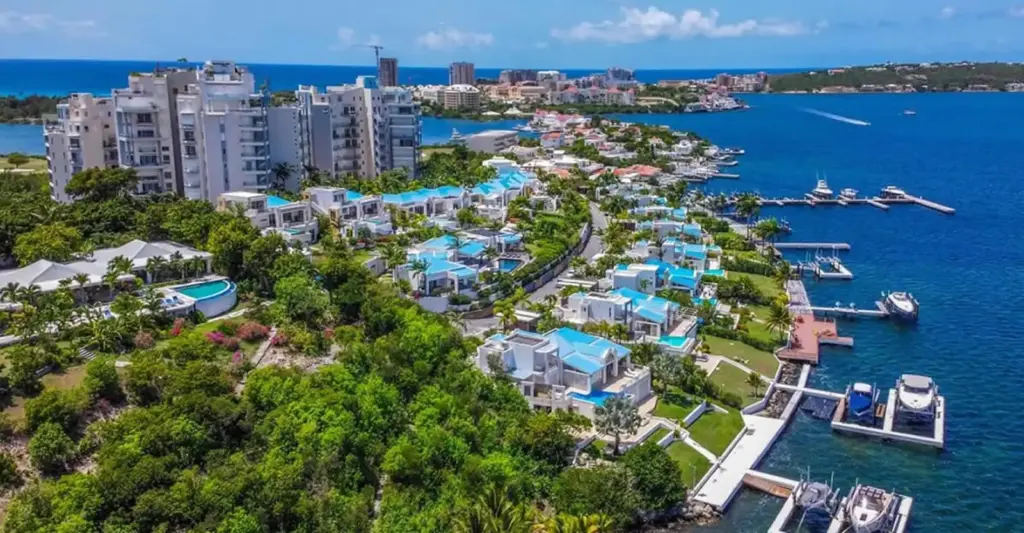
A St Maarten investment property works best on the Dutch side, where foreign buyers get full freehold ownership, closing costs run about 4 to 6 percent, and there is no annual property tax. The island uses US dollars in daily life, and a civil-law notary handles title and escrow. Buying property here is not a route to a passport, so treat immigration as a separate question for an immigration advisor. Princess Juliana airport brings direct US and European flights into the Dutch side, which is the practical reason a short-term rental strategy is workable here at all.
- Dutch-side closing costs are roughly 4 to 6 percent of price: about 4 percent transfer tax plus a 1 to 1.5 percent notary fee, usually paid by the buyer.
- There is no annual property tax on the Dutch side, which keeps the holding cost lighter than on the French side. If you plan to rent the unit out, ask a tax advisor which taxes apply to that income.
- Buying property here is not a route to a passport, and I have not seen a citizenship-by-investment path on the Dutch side, but immigration status is not my lane: confirm with an immigration advisor before you build a plan around it.
- Foreign ownership is unrestricted on the Dutch side, and financing exists for qualified buyers who bring a down payment.
Is a St Maarten investment property actually worth it?
A St Maarten investment property is worth serious consideration on the Dutch side, where foreign buyers hold full freehold, there is no annual property tax, closing costs stay near 4 to 6 percent, and the US dollar runs daily life. Princess Juliana airport brings direct US and European flights into the Dutch side, which is the practical reason a short-term rental strategy is workable here at all. It is not a citizenship shortcut.
I moved to the island around 2023, I live on the Dutch side, and I show clients the same island I live on every week. When people ask me whether St Maarten property investment makes sense, I start with the boring, load-bearing facts: how you own it, what it costs to close, and what it costs to hold. Those three answers decide more than any view ever will.
The ownership answer is simple on the Dutch side. You buy freehold in your own name, and a civil-law notary is mandatory. The notary handles the title search, the deed, escrow, and registration. That is why local buyers do not use US-style title insurance: the notary's title search, deed, escrow, and registration work is what protects the transaction here. Ask your notary to walk you through exactly what that check does and does not cover in your case, because it is their lane, not mine.
The holding answer is what surprises US and Canadian buyers most. There is no annual property tax on the Dutch side, so your recurring costs are mostly insurance, utilities, and any association fees. If you plan to rent the unit out, ask your tax advisor which taxes apply to that income before you model returns. For a rental, that keeps the recurring cost side lighter than in markets that tax the property every year.
The view sells the showing. The ownership structure and the holding cost decide whether it is actually a good investment.Wei Landgraf, Dutch-side resident agent
Here is what I want you looking at instead of a yield figure someone quoted you in a listing: how that specific building has actually been booking, what the association fee covers and whether the reserve is funded for real repairs, what the insurance premium and deductible genuinely come to, and who manages the unit when you are eight flights away. Those four line items move the outcome far more than the last few thousand you negotiate off the price. I walk buyers through that checklist regularly, and I will do it with you on any building you are looking at.
If you want the wider market picture first, start with my overview of St Maarten real estate, then come back to the numbers below.
How much does it cost to buy investment property on the Dutch side?
Buying investment property on the Dutch side of St Maarten costs roughly 4 to 6 percent of the price in closing costs, paid by the buyer. That breaks down to about 4 percent transfer tax plus a notary fee of around 1 to 1.5 percent. The seller usually pays the agent commission, and there is no annual property tax.
Here is how I lay it out for a client running the numbers on a purchase:
| Cost | Who pays | Rough amount |
|---|---|---|
| Transfer tax | Buyer | About 4% of price |
| Notary fee | Buyer | About 1 to 1.5% |
| Agent commission | Seller, usually | Set in the listing agreement |
| Annual property tax | Nobody, Dutch side | $0 |
What that table does not show is the cost of getting it wrong. Ask for the notary's quote in writing before you sign anything, ask what is included and what is billed on top, and ask the seller's side what association dues, utility arrears, or pending building assessments are attached to the unit. Those items are negotiable, and they are far easier to raise before an offer than after.
Financing exists for qualified foreign buyers, though you should expect to bring a meaningful down payment and to document income the way any lender wants. Terms, appraisal expectations, and how long a lender takes will vary with the property, your profile, and the bank, so I will not pretend there is one timeline that fits everyone. I tell buyers to start the financing conversation early, because it shapes which properties are realistic before you fall for one specific unit.
For a full walk-through of the paperwork and process, see my guide to buying property in St Maarten. On tax specifics for your own situation, confirm with your notary or tax advisor rather than taking a blog post as gospel.
St Maarten vs Saint-Martin: which side is better for investment?
For most investors, the Dutch side is cheaper to buy and to hold than the French side. On St Maarten, closing costs sit near 4 to 6 percent with no annual property tax. On Saint-Martin, transaction costs often run 7 to 8 percent and you also carry annual taxes. The Dutch side runs on US dollars, the French side on euros.
It is one island with two nations and no border checkpoint, so you can drive between them freely. The Dutch side is about 34 square kilometres, the French side about 53, and the whole island only 87. That freedom fools some buyers into thinking the two sides are interchangeable for investment. They are not. The rules, the currency, and the costs are genuinely different.
| Factor | Dutch side (St Maarten) | French side (Saint-Martin) |
|---|---|---|
| Nation | Kingdom of the Netherlands | France (EU) |
| Everyday currency | US dollar | Euro |
| Closing costs | About 4 to 6% | Often 7 to 8% |
| Annual property tax | None | Yes |
| Foreign ownership | No restriction, freehold | Different rules apply, confirm with a French-side notary before you commit |
I am a Dutch-side resident, so I am upfront about my bias, but the numbers are the numbers. If you want euro exposure, the French dining village of Grand Case, the pull of Marigot, or a Terres Basses villa, the French side has real appeal. Just price in the higher entry and holding costs before you decide, and get French-side legal and tax questions answered by someone licensed on that side rather than by me.
One practical note that catches people: the border runs through the Oyster Pond area, so a handful of properties sit close enough to it that you want the side confirmed on paper before you make an offer, not assumed from the driveway. I check that as a matter of routine.
I break this down further in my full comparison of St Maarten vs Saint-Martin.
Does a St Maarten investment property give me citizenship or residency?
Buying property here is not a route to a passport, and I have not seen a citizenship-by-investment path on the Dutch side, but immigration status is not my lane: confirm with an immigration advisor before you build a plan around it. Buying a home and gaining the right to live here are two separate processes, and I treat them that way with every client.
This matters because "st maarten citizenship by investment" gets searched often, and I would rather give you the honest answer than a hopeful one. Some Caribbean nations do sell citizenship for a qualifying investment. St Maarten sits inside the Kingdom of the Netherlands, and I have never worked a purchase here that produced a passport. If a second passport is the goal, verify the current rules with an immigration advisor before you spend a dollar on property in pursuit of it.
On entry and stay: US, Canadian, UK, and EU visitors generally arrive on a valid passport with no visa for up to 90 days. Living here long term requires a residence permit, which is assessed on its own criteria and is not something ownership hands you. Check the current rule with immigration before you rely on it, because these details do change.
Buy the property because the property makes sense on its own. Then treat residency as a separate project with its own criteria, its own advisor, and its own timeline. I walk buyers through this distinction regularly, and the ones who get burned are the ones who bought expecting the paperwork to follow automatically.
If your goal is an asset in a dollar economy, and you are willing to treat the residence permit as a separate process with its own criteria, it can make sense. If your goal is status, start with the advisor, not the listing.
If residency is part of your plan, my notes on St Maarten residency are a useful starting point before you speak with an advisor.
Which St Maarten neighborhoods are best for investment property?
The best St Maarten neighborhoods for investment property cluster around beaches, dining, and the airport, where visitor traffic is easiest to reach. On the Dutch side I point investors toward Simpson Bay, Maho, Cupecoy, Pelican Key, Indigo Bay, Dawn Beach, and Oyster Pond, with Philipsburg as the Dutch-side capital and cruise port.
Each area attracts a different renter. Here is how I frame them for clients:
- Simpson Bay: dining and marina life, popular with visitors who want to walk to dinner rather than drive to it.
- Maho and Cupecoy: condo-heavy, close to the airport, and home to the famous planes landing over Maho Beach.
- Pelican Key and Indigo Bay: view-heavy and popular with buyers who want a lock-and-leave second home. Security setups vary by complex, so ask me about the specific building.
- Dawn Beach and Oyster Pond: quieter east-side water views, with reefs offshore, that tend to appeal to longer stays.
- Philipsburg: the commercial centre, with cruise arrivals and a different rhythm entirely.
My honest guidance: I would rather you buy in an area with proven visitor traffic than buy a larger unit somewhere quiet, and I will give you my honest read on how a specific building has actually been booking before you make an offer. That read comes from the building, the management company, and the owners in it, not from a rule of thumb about neighborhoods.
The other thing I push people to think about is what the property is for when it is not earning. Some buyers want somewhere they will actually use, close to Grand Case or a short hop from the ferry for a day trip to Anguilla. Others want the unit booked as many nights as possible and never plan to sleep in it. Those are different properties, and pretending one building serves both goals equally is how people end up disappointed.
When you are ready to look at live inventory, browse current St Maarten homes for sale and tell me which of these areas fits your budget and strategy.
What are the risks of a St Maarten property investment?
The main risks of a St Maarten property investment are weather exposure, insurance cost, and mismatched expectations about residency. The island sits inside the hurricane belt, and Hurricane Irma hit in September 2017. Construction improved afterward, but you should still budget for real insurance rather than a hopeful line item.
I do not soften this for clients. Storms are part of owning here, and your insurance and build quality matter as much as the view. When I show a property, I ask about the year of build or renovation, the roof, the windows, and how the property came through Irma. I ask what the association did after the storm and whether it paid for it out of reserves or a special assessment. Those answers tell me more about long-term risk than any glossy brochure.
Insurance itself deserves its own conversation. Get a real quote on the specific property before you are committed, read what the deductible looks like in a named-storm event, and understand what is covered on the building versus what you carry on the contents. Hurricane season is a known part of the calendar here, and the trade winds and the timing shape both bookings and costs.
If hurricane exposure is a dealbreaker, be honest with yourself early. Aruba sits outside the hurricane belt and is the comparison island buyers raise most. St Maarten's trade-off is a dollar economy, no annual property tax, and a major airport, in exchange for sitting in the belt. That is a real trade, and only you can make it.
The other risk is financing surprises. Loans exist for qualified foreign buyers, but terms and down payment expectations differ from what you may know at home, so line that up before you commit rather than discovering it mid-deal. Verify insurance and legal specifics with your notary, and your tax position with a tax advisor, rather than assuming your home-country rules travel with you.
Frequently Asked Questions
Can foreigners buy investment property in St Maarten?
Yes. On the Dutch side there is no restriction on foreign ownership, so non-residents can buy freehold in their own name. A civil-law notary is mandatory and handles the title search, deed, escrow, and registration. Financing is available for qualified foreign buyers who put down a deposit.
How much are closing costs on a St Maarten property?
On the Dutch side, plan for about 4 to 6 percent of the purchase price, paid by the buyer. That is roughly 4 percent transfer tax plus a 1 to 1.5 percent notary fee. The seller usually pays the agent commission, and there is no annual property tax. Ask your notary for a written quote on your specific purchase.
Does St Maarten have citizenship by investment?
Buying property here is not a route to a passport, and I have not seen a citizenship-by-investment path on the Dutch side, but immigration status is not my lane. Tourists generally get up to 90 days on a valid passport, and living here long term requires a separate residence permit. Confirm the current rules with an immigration advisor before you build a plan around it.
Is it better to invest on the Dutch or French side?
For most investors the Dutch side is cheaper to buy and hold: closing costs near 4 to 6 percent and no annual property tax, versus roughly 7 to 8 percent and annual taxes on the French side. The Dutch side also runs on US dollars, which many buyers prefer. Foreign ownership rules differ on the French side, so confirm those with a French-side notary.
Do you pay annual property tax in St Maarten?
On the Dutch side of St Maarten there is no annual property tax, which is one reason investors compare it favorably with other markets. The French side of Saint-Martin does carry annual taxes. If you plan to rent the unit out, ask a tax advisor which taxes apply to that income, and always confirm your specific tax situation before you buy.
Is St Maarten a safe place to buy given hurricanes?
St Maarten sits inside the hurricane belt, and Hurricane Irma hit in September 2017. Construction improved afterward, so ask about the year of build or renovation, the roof, the windows, and how the property came through Irma. Budget for solid insurance and get a real quote before you commit. If you want a location outside the belt, Aruba is the common comparison island.
