
Best Places to Stay in St Maarten: A Local Agent's Guide (2026)
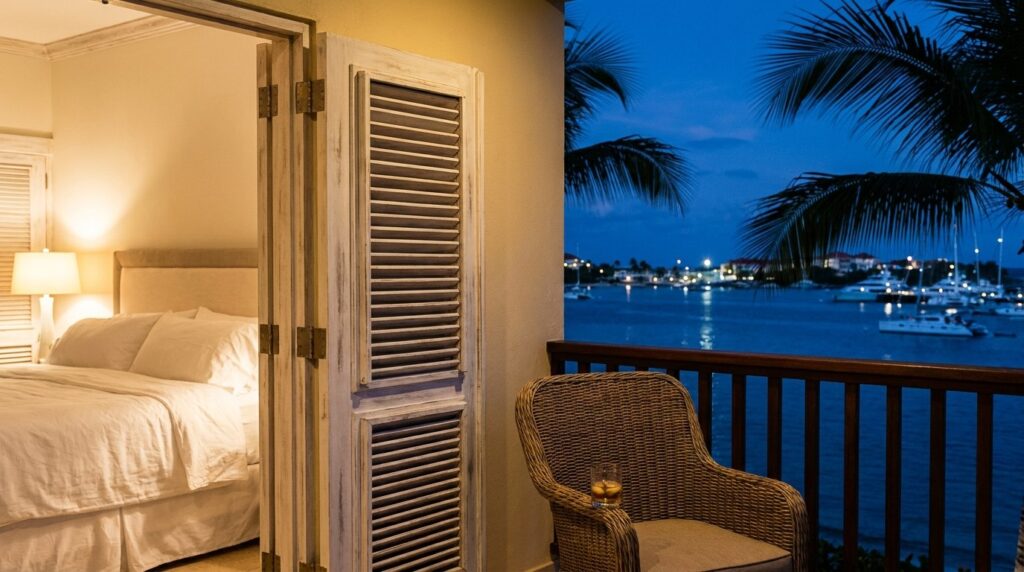
The best places to stay in St Maarten are Simpson Bay for dining and nightlife, Maho for beach action and casinos, Cupecoy for quiet condos, and Philipsburg for shopping. All four sit on the Dutch side, use US dollars, and sit close to Princess Juliana airport. The French side, with Grand Case and Orient Bay, runs calmer and costs more. Where you stay often hints at where you might buy.
- Simpson Bay is the best all-around base: central, walkable, and full of restaurants, bars, and marinas.
- The Dutch side (Sint Maarten) uses US dollars and hosts Princess Juliana airport; the French side uses euros.
- You can cross between the Dutch and French sides freely, with no border checkpoint.
- The island is busiest in the dry winter months, and it sits inside the hurricane belt, so late summer and fall trips need a forecast check.
What are the best places to stay in St Maarten?
The best places to stay in St Maarten are Simpson Bay for restaurants and nightlife, Maho for beach action and casinos, Cupecoy for quiet cliffside condos, and Philipsburg for cruise-port shopping. All four sit on the Dutch side, run on US dollars, and are an easy drive from Princess Juliana airport. Pick the base that matches your pace.
I live on the Dutch side and show clients around most weeks, so I think about lodging the way a resident does: what is walkable after dark, where traffic knots up on a cruise day, which beach you reach first. The island totals 87 square kilometers, roughly 34 Dutch and 53 French, so the neighborhood matters more than the brand on the sign.
Sint Maarten is the Dutch south, Saint-Martin the French north, with no checkpoint between them, so you can sleep in one country and eat dinner in the other. Most first-timers pick the Dutch side: Princess Juliana (SXM) sits there, it is the regional hub with direct US and European flights, and daily life runs on dollars.
Entry is usually simple. US, Canadian, UK, and EU travelers generally arrive on a valid passport, no visa, for up to 90 days; longer stays need a residence permit. I am an agent, not an immigration officer, so confirm the current rule with your airline or immigration before you rely on it.
Should you stay on the Dutch side or the French side?
Stay on the Dutch side (Sint Maarten) for walkable nightlife, US dollars, and quick airport access. Choose the French side (Saint-Martin) for calmer beaches and the island's most celebrated dining, in Grand Case and around Orient Bay. You cross freely with no checkpoint, so many clients sleep on one side and drive to the other for dinner.
| What matters | Dutch side (Sint Maarten) | French side (Saint-Martin) |
|---|---|---|
| Everyday currency | US dollar | Euro |
| Feel | Lively resorts, casinos, nightlife | Quieter, intimate, French cafes |
| Best dining | Simpson Bay strip, Philipsburg | Grand Case, Orient Bay |
| Cost to buy and hold | Lower: about 4 to 6% closing, no annual property tax | Higher: often 7 to 8% costs, plus annual taxes |
| Airport | Close to Princess Juliana (SXM) | Farther from SXM |
| Top areas | Simpson Bay, Maho, Cupecoy, Philipsburg | Grand Case, Orient Bay, Marigot, Terres Basses |
Those cost figures are customary ranges, not a quote for your deal. Confirm them with a notary on the Dutch side or a notaire on the French side, and with your tax advisor.
For a visitor, the difference is money and mood. The Dutch side hands you dollars, later hours, and more rooms per beach. The French side asks for euros and pays you back with long lunches and the restaurant row that made Grand Case famous. Marigot, the French capital, is worth a market morning; Philipsburg, the Dutch capital, a boardwalk afternoon. More on how the Dutch and French sides compare.
The border is a line on a map, not a gate. Sleep where the vibe fits and drive across for whatever you are missing.Wei Landgraf, Dutch-side resident agent
Which St Maarten neighborhood should you pick?
Pick your St Maarten neighborhood by trip style: Simpson Bay for dining and marinas, Maho for plane-spotting and casinos, Cupecoy for sunsets and low-key condos, Pelican Key for harbor views, Philipsburg for shopping off the cruise pier. Dawn Beach and Oyster Pond suit anyone who wants calm mornings on the east coast.
| Neighborhood | Best for | The vibe |
|---|---|---|
| Simpson Bay | Nightlife, dining, marinas | Busy, walkable, central |
| Maho | Plane-spotting, casinos, shopping | Energetic, resort-heavy |
| Cupecoy | Sunsets, quiet condos | Cliffside, calm, upscale |
| Pelican Key | Marina and harbor views | Residential, convenient |
| Philipsburg | Duty-free shopping, boardwalk | Capital, cruise-day crowds |
| Dawn Beach / Oyster Pond | Snorkeling, calm mornings | East coast, laid-back |
| Cole Bay | Local prices, central errands | Practical, unpretentious |
My default is staying in Simpson Bay: you can walk to dinner and still reach the airport and Maho quickly. If you would rather trade energy for sunsets, Cupecoy's cliffside condos are quiet, roomy, and popular with the people who end up buying here. Philipsburg suits a shopping day more than a full week; it empties the moment the ships pull away.
Two things a listing photo never shows. Maho sits under the approach path, so planes land low over the beach: a spectacle on day one, a consideration on night three if you sleep lightly. And the Dutch and French border runs through the Oyster Pond area, so two neighbors there can sit in different countries. If you are looking at property there, that line matters.
Where should you stay based on your travel style?
Match the area to who you are traveling with. Families and repeat visitors lean toward Cupecoy or Dawn Beach for space, kitchens, and calmer water. Couples chasing restaurants and bars pick Simpson Bay or Maho. Budget-minded travelers do well in Cole Bay or Philipsburg.
On evening pace: Simpson Bay is loud and late, Maho is lively, Philipsburg is busy by day and quiet once the ships go, Cole Bay is everyday and local, and Cupecoy is quiet enough that you will drive to dinner. Read that as pace, not as a ranking. The best places to visit in St Maarten cluster around these same bases: Maho Beach for the planes coming in low over the sand, Philipsburg's boardwalk for duty-free shops, the Mullet Bay golf grounds, the reefs off the east coast. The French side handles slower afternoons: Grand Case as a dining village, clothing-optional beaches if that suits you, boat trips to Creole Rock and Tintamarre. Anguilla is an easy ferry day out.
- Families: Cupecoy or Dawn Beach for condos, kitchens, and gentle water.
- Couples and foodies: Simpson Bay for variety, Grand Case for a special night.
- Budget-minded: Cole Bay and Philipsburg, close to buses and groceries.
- First-timers: Simpson Bay, central to almost everything.
Where should you stay if you're thinking about buying?
If your visit is really a scouting trip, stay in the neighborhood you are considering and live in it for a week. On the Dutch side there is no restriction on foreign ownership, so a foreign buyer can hold freehold title. Buyer closing costs customarily run about 4 to 6 percent of the price: roughly 4 percent transfer tax plus about 1 to 1.5 percent in notary fees, with no annual property tax. Those are typical figures, not a promise, so have your notary confirm them.
I tell buyers to rent in two different areas first. A Cupecoy sunset feels perfect on night one, and then you find you actually wanted Simpson Bay's walkable dinners. On the Dutch side a civil-law notary handles the title search, deed, escrow, and registration, which is why buyers here do not use US-style title insurance. I walk clients through that regularly, but the notary confirms the numbers.
Use the week like a buyer, not a guest. Ask what the association fee covers, whether short-term rental is permitted, where the water and backup power come from, and when the building went up, since standards here tightened after 2017.
When you are ready to move from vacation to ownership, start with St Maarten real estate for the market picture, then read my walkthrough on buying property in St Maarten. The seller usually pays the agent commission, and financing exists for qualified foreign buyers with a down payment. Your terms come from a bank; the legal and tax mechanics from your notary.
When is the best time to visit St Maarten?
The island is busiest in the dry winter stretch, when the trade winds are steady, calendars fill, and rates run highest. Shoulder months are quieter and usually cheaper, with warm water and thinner beaches. St Maarten sits inside the hurricane belt, so for a late summer or fall trip I watch the forecast closely and would confirm the current season dates with an official weather source first.
Storm risk deserves a straight answer instead of a sales pitch. Hurricane Irma hit in September 2017 and it changed how people here build; construction standards improved afterward, so newer buildings are held to a higher bar. If storm season worries you, an island like Aruba sits outside the belt, but you give up this island's dining, its two-nation character, and its flight connections.
Booking inside the storm-risk part of the year is a reasonable trade if you take travel insurance and a flexible rate. The forecast is the only calendar that matters once you are in the belt. For property insurance or windstorm coverage, confirm the details with a licensed insurer, not with me.
Cruise-ship days change the island's mood more than the month does, so ask your host which days are heavy.
Frequently Asked Questions
What is the best area to stay in St Maarten for first-timers?
For a first trip, I point people to Simpson Bay. It is central, walkable, full of restaurants and bars, and close to both the airport and Maho Beach. You get the island's energy without committing to one quiet corner, and taxis and rental cars are easy.
Is it better to stay on the Dutch side or French side of St Maarten?
It depends on your pace. The Dutch side (Sint Maarten) has nightlife, casinos, US dollars, and airport proximity. The French side (Saint-Martin) is quieter, with euro pricing and standout dining in Grand Case. You cross freely with no checkpoint, so many visitors enjoy both.
Where should I stay in St Maarten without a car?
Simpson Bay and Philipsburg are the most walkable bases. In Simpson Bay you reach restaurants, bars, and the beach on foot, and buses run the main road. Philipsburg puts you on the boardwalk near the shops. For most other areas, rent a car.
What is the best place to stay in St Maarten for nightlife?
Simpson Bay is the nightlife hub, with waterfront bars, casinos, and late dining along one strip. Maho is a close second, known for beach clubs, its casino, and the plane-spotting crowd. Light sleepers should ask for a room set back from the road.
Is Simpson Bay a good place to stay in Sint Maarten?
Yes. Simpson Bay is my top all-around pick and one of the best places to stay in Sint Maarten. It is central, walkable, and packed with dining and marinas, with the airport and Maho close by. The trade-off is noise: it is the island's busiest strip.
When is the best time to visit St Maarten?
The island is busiest in the dry winter stretch, when rates run highest. Shoulder months are quieter and usually cheaper. St Maarten sits inside the hurricane belt, so for a late summer or fall trip I watch the forecast closely and suggest confirming the current season dates with an official weather source before you book.
